




















Accuracy & Performance Testing
A 95%-accurate medical diagnosis AI still fails if that 5% concentrates in rare cancers. LQA tests for consistent performance across every scenario the AI will actually face, not just the average case.
- Cross-validation and stratified testing across subpopulations
- Performance monitoring in production
- Degradation testing under poor-quality inputs
Robustness Testing
Real-world inputs are noisy, incomplete, and sometimes adversarial. LQA checks that the AI holds up under these conditions instead of failing once inputs stray from its training data.
- Adversarial and edge-case testing using intentionally crafted inputs\
- Noise injection for incomplete or messy inputs
- Out-of-distribution detection
- Metamorphic testing, small input changes shouldn't cause wild output swings
Fairness & Bias Mitigation Testing
A functional game can still lose players to FPS drops, slow loading, or crashes under pressure. LQA checks the performance conditions that affect stability, responsiveness, and release confidence.
- Demographic parity and equalized odds testing
- Counterfactual fairness testing
- Regular audits using diverse datasets
- Fairness toolkits such as IBM's AI Fairness 360
Transparency & Explainability Testing
Regulators and users need to understand why an AI reached a decision, especially in high-stakes domains like loan denials, medical diagnoses, or legal predictions, where "the AI said so" isn't acceptable. LQA validates that decisions can actually be explained, not just produced.
- Model-agnostic methods such as LIME and SHAP
- Attention mechanisms for neural networks and decision trees for interpretable models
- Comprehensive logging and audit trails
- Accuracy-versus-interpretability trade-off checks
Privacy & Data Protection Testing
GDPR and similar laws worldwide require AI systems to protect personal data, avoid leaking training data back out, minimize data use, and support "right to be forgotten" requests. LQA verifies the system holds up against all four.
- Membership inference testing
- Model inversion attack testing to prevent training-data extraction
- Differential privacy verification
- Encryption and access-control testing
Safety & Harm Prevention Testing
AI systems must not cause physical, psychological, financial, or societal harm, including harm no one anticipated. LQA checks for proactive risk controls, safety constraints, and oversight at every critical decision point.
- Hazard analysis using FMEA for AI
- Red team exercises to deliberately try to trigger harm
- Monitoring for toxic outputs and safety boundary testing
- High-risk scenario checks (e.g., a medical AI should never recommend dangerous drug combinations, even for novel cases)






Our Case Studies
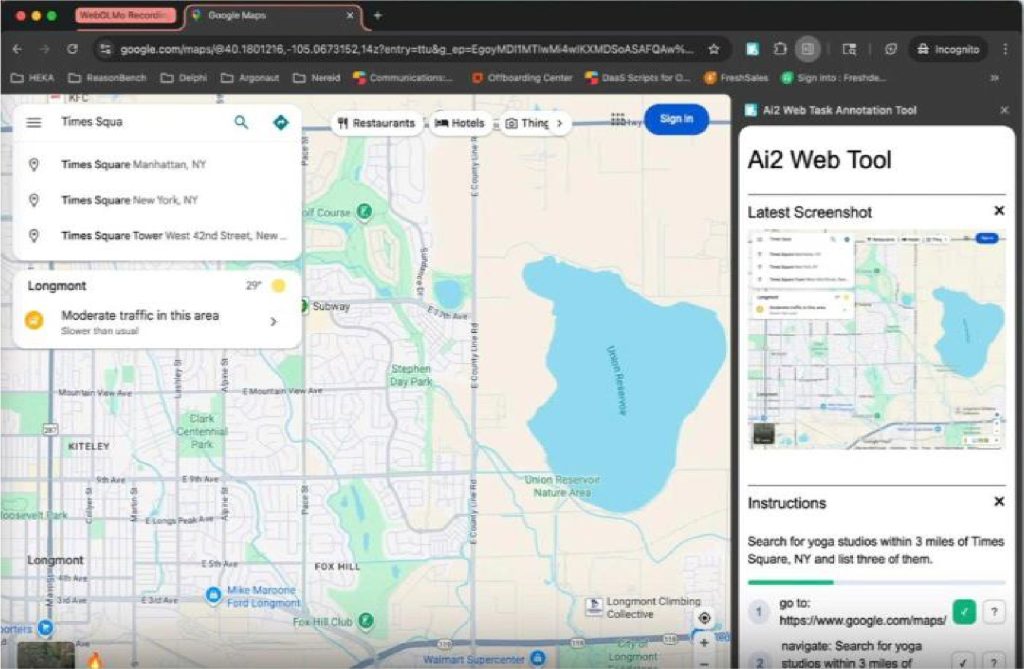
Web Browsing & AI Agent Output Evaluation

AI Agent Computer Use (CUA) Evaluation & Training

Hands-free AI & Gaze Detection System Validation
Client Input
- 1.
- AI application build, API endpoint, staging environment, or deployment package

- 2.
- Target use cases, model type, and deployment platforms
- 3.
- System design notes, known limitations, risk priorities, and deadline
- 4.
- Compliance requirements, data handling constraints, and evaluation benchmarks when applicable
- 5.
- Issue tracker, report format, severity rules, and communication preferences
Step-by-step

Scope alignment and AI risk review

Model, platform, and use-case matrix setup

Test plan, test scenarios, and environment preparation

Accuracy, bias, security, data, explainability, and compliance testing

Issue reporting with evidence, affected models, and reproduction steps

Fix verification, regression testing, and

Release-readiness summary and continuous-monitoring recommendations
LQA Output

- Test scope, schedule, and model/platform/use-case coverage
- Test scenarios, checklist, and execution summary
- Issue reports with steps, evidence, logs, severity, and affected models
- Bias, explainability, and compliance notes when included in scope
- Retest results, regression notes, and unresolved-risk summary
- Final QA report with release and continuous-monitoring recommendations






AI/ML-specific QA Expertise
LQA’s AI testers are trained by vetted in-house data engineers and experienced AI developers, so they test with how pipelines and models actually work in mind.

Platform & Model Coverage
LQA plans test coverage around your target AI models, frameworks, and deployment platforms to catch issues single-model checks may miss.

Compliance & Deployment-readiness Awareness
LQA checks regulatory and deployment risks early, from EU AI Act and NIST AI RMF alignment to bias documentation and explainability requirements.

Actionable Issue Reporting
LQA reports issues with clear reproduction steps, affected model versions, evidence, severity, and retest status.

Secure Data & Model Handling
LQA is ISO 27001 certified, protecting source code, credentials, test data, environments, and unreleased builds through strict access controls, secure communication, NDA requirements, and security procedures.

Scalable AI QA Capacity
Scale QA capacity to up to 20 engineers within two weeks to support pilots, model updates, and feature releases, then flex resources to match the needs of ongoing AI monitoring.

Project-based Model
Fixed-scope AI application QA for prototypes, pilot releases, model launches, or pre-launch validation. LQA manages the test cycle so your team can validate accuracy, bias, hallucination risk, security, and compliance within a defined timeline.
Best for
- New AI application launches
- Pre-deployment compliance validation
- Fixed-scope model/platform coverage
- Pre-launch pilot QA
- Defined release-candidate testing

Time & Material Model
Flexible QA support based on changing model priorities, issue volume, stakeholder feedback, release plans, or retraining schedules. LQA adjusts scope, coverage, and QA capacity as your AI application testing needs evolve.
BEST FOR
- Changing or unclear test scope
- Frequent model updates or retraining
- Multiple platform/deployment requirements
- Ongoing monitoring or patch cycles
- Fast-moving release timelines

Dedicated Specialist Capacity Model
A dedicated AI QA specialist or team works alongside your project for ongoing testing, regression cycles, model/platform coverage, compliance checks, and continuous monitoring. This model builds deeper product knowledge over time.
BEST FOR
- Long-term AI QA support
- Recurring regression and continuous-monitoring cycles
- Multi-model or multi-platform deployment
- Teams needing stable AI QA ownership
- Continuous AI operations and monitoring