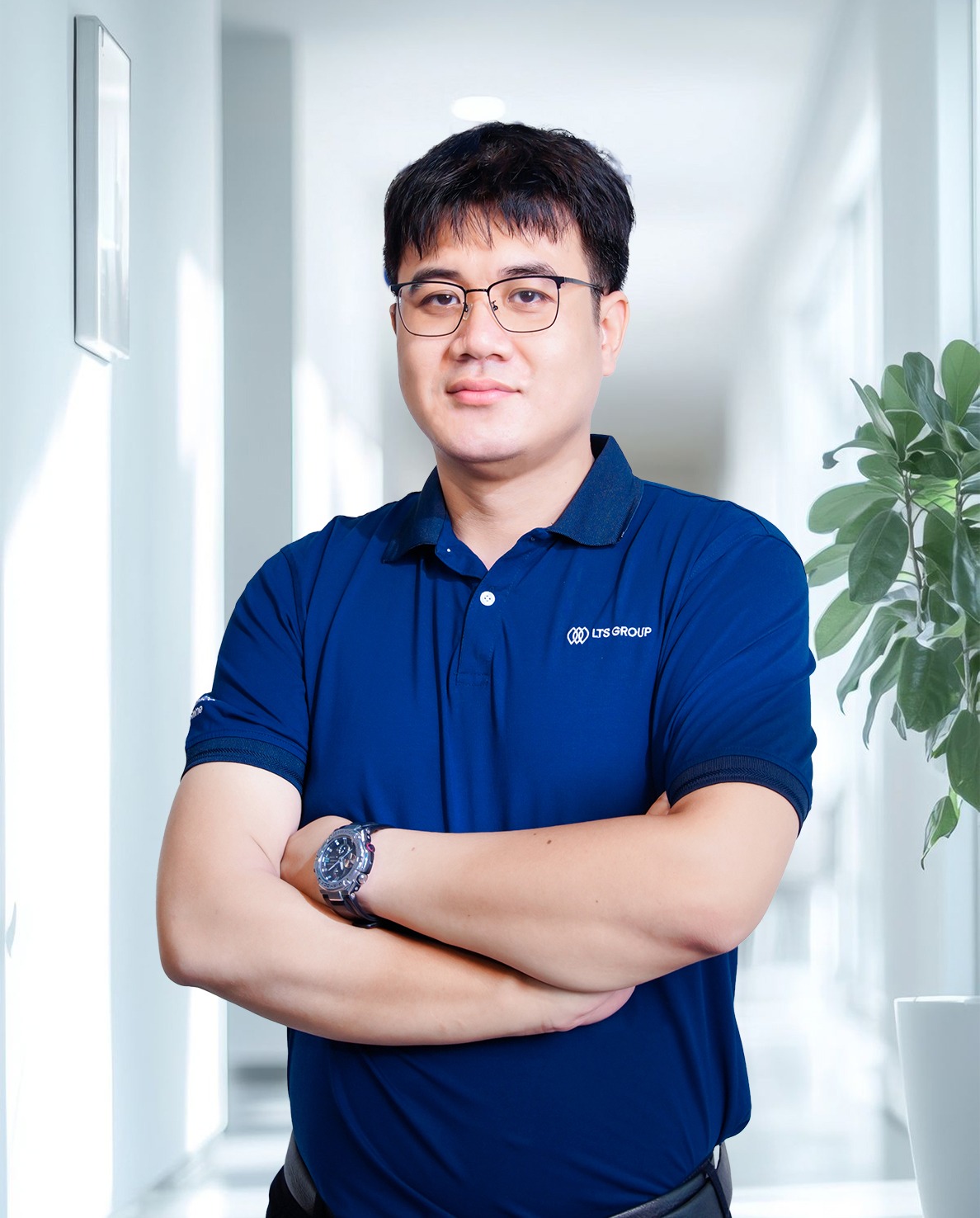
Ryan Le
Gen AI Manager
Coding, STEM & Engineering, Physical AI & Robotics





























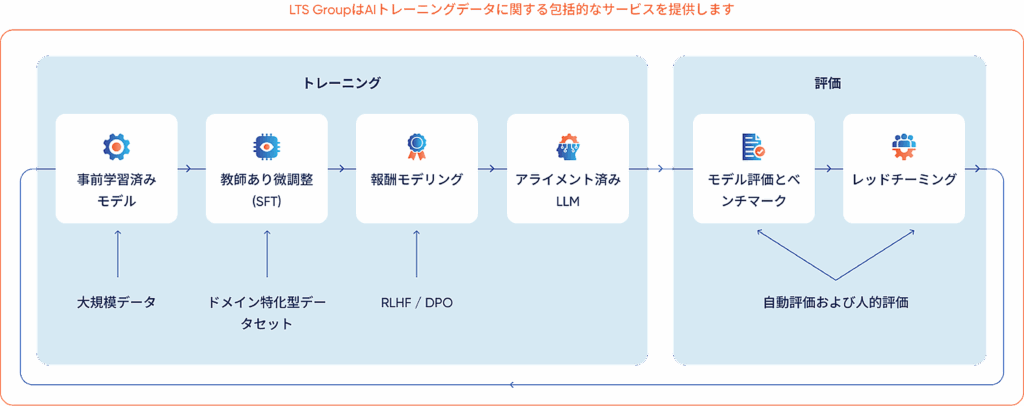
LQA builds high-quality supervised datasets to adapt pre-trained LLMs into accurate, task-oriented systems through prompt design, response generation, multi-turn dialogue creation, and domain-specific refinement.

LQA delivers structured instruction datasets to enhance model reasoning, consistency, and task understanding, including instruction-response pairs, chain-of-thought annotation, and complex scenario design.

Our experts evaluate and rank model outputs using RLHF and DPO to align responses with human expectations across single- and multi-turn interactions, ensuring accuracy, clarity, and tone control.

LQA enhances LLM accountability by utilizing targeted datasets and testing frameworks that minimize hallucinations, detect harmful content, and ensure adherence to safety and regulatory standards.

LQA provides comprehensive datasets for LLM evaluation and testing pipelines, enabling the measurement of performance, detection of failures, and validation of model readiness.

LQA develops datasets for agentic AI systems capable of tool use, planning, and multi-step execution, including function calling, workflow orchestration, retrieval-augmented generation (RAG), and task-oriented interaction data.


Requirement Analysis
LQA works closely with clients to define business goals, data sources, and LLM fine-tuning requirements, covering model scope, domain needs, training methods, evaluation criteria, and cost considerations.
Team Setup
A dedicated team of experts are assembled and aligned through onboarding sessions, ensuring consistency in data preparation, annotation standards, and execution from day one.

Pilot & Validation
LQA runs pilot tasks to validate workflows, refine guidelines, and address edge cases early, incorporating feedback to ensure alignment with expected model performance.
Full-scale Execution
We scale LLM training and fine-tuning pipelines with continuous quality control, structured evaluation, and iterative feedback loops to maintain accuracy and consistency.

Improvement
We monitor performance, identify gaps, and optimize datasets and workflows over time, ensuring your LLM systems improve in reliability, safety, and real-world performance.

教育・エドテック
理解度に応じたAI家庭教師の構築、テスト問題や教材の自動生成、記述式回答のリアルタイムな添削とフィードバックを、LLMを用いてサポートします。これにより、生徒一人ひとりに最適化された学習体験を提供し、教育者の業務負担を軽減します。
LQA works closely with clients to define business goals, data sources, and LLM fine-tuning requirements, covering model scope, domain needs, training methods, evaluation criteria, and cost considerations.
A dedicated team of experts are assembled and aligned through onboarding sessions, ensuring consistency in data preparation, annotation standards, and execution from day one.
LQA runs pilot tasks to validate workflows, refine guidelines, and address edge cases early, incorporating feedback to ensure alignment with expected model performance.
We scale LLM training and fine-tuning pipelines with continuous quality control, structured evaluation, and iterative feedback loops to maintain accuracy and consistency.
We monitor performance, identify gaps, and optimize datasets and workflows over time, ensuring your LLM systems improve in reliability, safety, and real-world performance.




















Vietnamese

English

Russian

Mandarin Chinese

Cantonese

Japanese

Korean

Malay

Indonesian

Thai

Lao

Hindi

Arabic

French

German

Spanish

Portuguese

Italian

Bulgarian

Hungarian

Engineering

Civil Engineering

Law

Finance

Accounting

Economics

Mathematics

Computer Science

Medicine

Psychology

Physics

Healthcare

Chemistry

Biology

Astronomy

Biotechnology

Bioinformatics

Teaching

Linguistics

Religion

Language Arts

Music

Philosophy

History

Performing Arts

Robotics Engineers

Computer Scientists

Software Engineers

Systems Architects

Data Engineers

AI/ML Researchers

Financial Analysts

Accountants

Auditors

Economists

Investment Bankers

Risk Managers

Psychologists

Sociologists

Political Scientists

Administrators

Scientists

Mathematicians

Photographers

Screenwriters

VFX Supervisors

Cinematographers

Art Directors

Creative Directors

Animation Directors

3D Modelers

Sound Designers

Audio Engineers

Music Composers

Voice Directors





LQA delivers high-quality datasets for LLM fine-tuning, powered by structured evaluation, rigorous validation, and human-in-the-loop workflows to ensure accuracy and consistency.

Our AI trainers combine deep industry knowledge with data expertise to build LLMs that understand specialized terminology, complex workflows, and real-world business contexts.

With a diverse, multilingual workforce, we enable LLM training and evaluation across languages, regions, and cultural contexts for scalable global deployment.

Optimize LLM fine-tuning costs with flexible engagement models and efficient human-in-the-loop workflows, without compromising data quality or model performance.
昆虫・幼虫の2Dバウンディングボックス・アノテーション
イタリアの大学による政府出資の昆虫・幼虫・感染症媒介研究プロジェクトを支援。昆虫個体群の早期発見と分析精度の向上により、感染症拡大防止に向けた研究の加速に貢献しました。
詳細を見る 農業画像セグメンテーションの自動化支援
デジタルツインおよびLiDARソリューションを展開する韓国企業向け。未加工の膨大な農業画像データに対し、極めて短期間で高品質なセグメンテーション・アノテーションを提供し、プロジェクトの迅速な立ち上げを実現しました。
詳細を見る 小売店舗における商品(SKU)の2Dバウンディングボックス
小売・スーパーマーケット環境における商品(SKU)検知AIの学習データ構築プロジェクト。棚にある商品の正確な認識・自動識別を可能にし、在庫管理システムの精度向上を支援しました。
詳細を見る 自動運転向けポリゴン・アノテーションによる物体分類
自動運転(AV)技術を牽引する韓国の知覚ソフトウェア企業向け。世界中から収集された膨大な走行データに対し、高精度な2Dポリゴンアノテーションを実施し、安全性に直結する物体識別精度の向上を支えています。
4Dデジタルツインプラットフォーム向け建築図面ラベリング
建設業界のDXを推進する4Dデジタルツインプラットフォーム向け。複雑な建築図面や技術データのラベリングを行い、設計データと現場の進捗をリアルタイムに同期させる高度な可視化を支援しました。
詳細を見る AIトレーニング向けアプリ操作データの収集・記録
人間とAIの相互作用を研究する米国の研究所向け。AIがより人間らしく直感的にデジタルプラットフォームを操作できるよう、リアリティのある膨大なユーザー操作ログとインタラクションデータを収集・提供しました。
詳細を見る ハンズフリー操作AI向けの視線データ収集
視線のみでデバイスを操作する次世代インターフェースを開発するイスラエルの技術企業向け。手動入力不要のコミュニケーション実現に向け、多様な条件下での大規模な視線データの収集・構造化を行いました。
詳細を見る 建設現場の安全監視システム向け2Dバウンディングボックス
建設現場の安全モニタリングを専門とする韓国のAI企業向け。作業員や危険エリア、安全装備の着用状況をリアルタイムで検知するコンピュータビジョン・システムの構築をデータ側面から強力にバックアップしました。
物流現場のフォークリフト・パレット間動作のキーポイント抽出
スマート倉庫や製造現場のオペレーション監視システム開発。フォークリフトとパレットの相互作用を正確に捉える2Dキーポイントアノテーションを提供し、作業の安全性向上とワークフローの最適化を実現しました。