

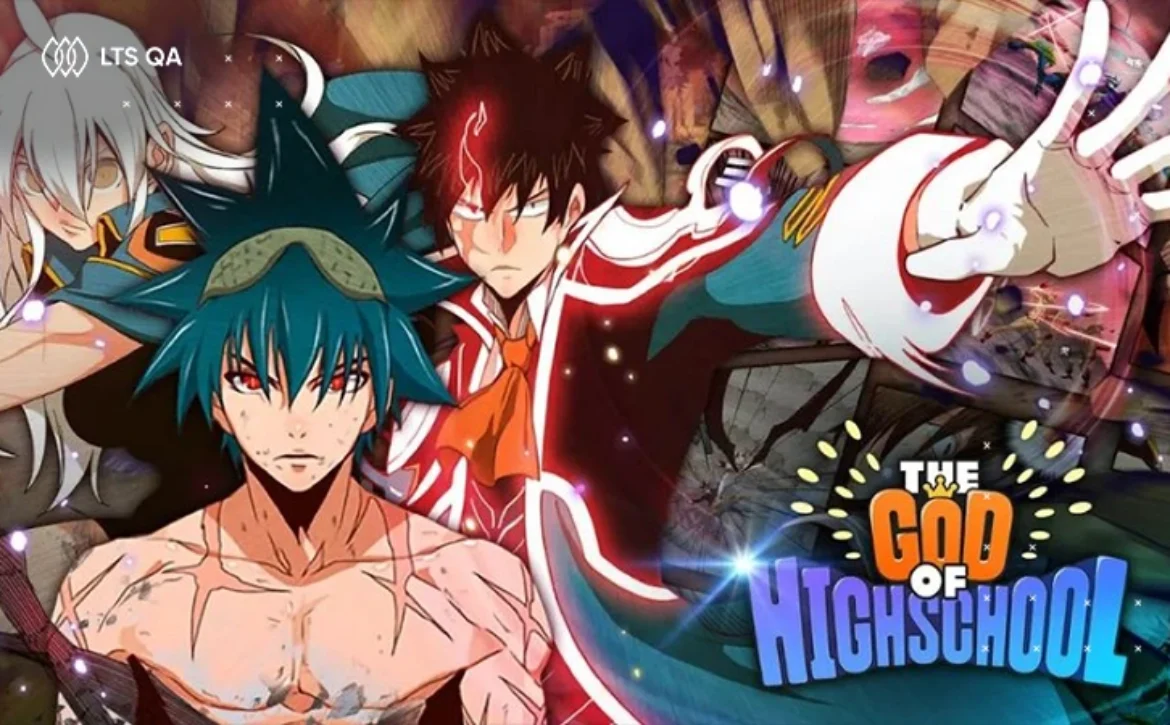
God of Highschool Game Testing
Overview
Game Genre
Gacha Turn-based RPG based on a famous South Korean Webtoon/Manhwa
Core Technology
Strategic team-building, elemental counters, and special character abilities (“Charyeok”)
Platforms
Published by Indonesia’s leading media group, targeting the Indonesian and wider Southeast Asian (SEA) mobile market.

Challenges & Solutions
Challenge 1: The “Legacy” Codebase Factor
The Problem:
The original game has been live globally for over a decade. Its source code contains 10 years of layered updates, making it highly likely that a newly localized version for Indonesia would inherit old technical debt, performance issues, or hidden legacy bugs.
Our Solution:
We conducted a deep Code & Feature Regression Sweep, prioritizing the core gameplay loop and oldest system modules to catch hidden bugs early.
We ran intensive long-session stability tests to monitor memory leaks, ensuring the older architecture runs smoothly on modern mobile OS versions.
Challenge 2: Market Suitability for Modern SEA Gamers
The Problem:
A game that succeeded globally 10 years ago might not appeal to modern Indonesian and SEA mobile players. The publisher needed real data on whether the progression speed, gacha drop rates, and difficulty curves would still resonate with today’s market.
Our Solution:
We formed a dedicated Playtest Focus Group consisting of experienced QA players who specialize in modern anime/manga gacha games in the SEA region.
Beside standard functional testing, our team playtested competing top-tier gacha games currently active in the market. We delivered a comprehensive Competitive Benchmark Report to the publisher, providing detailed feedback on what the game does well and actionable advice on adjusting drop rates, reward systems, and difficulty curves to improve player retention
Challenge 3: Extreme Sprint Timeline
The Problem:
The publisher required five specialized types of QA (Functional, LQA, Compatibility, Regression, and Market Playtesting) to be completely finished in under three weeks, which demanded an incredibly high level of efficiency.
Our Solution:
We used a Dynamic Resource Allocation strategy, splitting the QA team into concurrent sub-teams that worked in parallel.
While the functional team verified system logic, the LQA and Playtest teams worked simultaneously inside optimized test environments, allowing us to deliver all five testing phases successfully before the strict 3-week deadline
Scope of Work & Team Structure
Scope of Work
- Informed Go/No-Go Decision: Provided the MNC Group with a data-driven “Market Appeal” report, allowing them to evaluate the project’s ROI before a full-scale marketing blitz.
- Modernized Stability: Identified and cleared legacy bugs that would have hindered the experience on modern OS versions (Android 14/iOS 17+).
- Balanced Economy: Verified that the game’s monetization and difficulty curves were fair and sustainable for the target audience, protecting long-term retention.
- Timeline Achievement: Delivered a 360-degree quality assessment within the strict 18-day window, enabling the client to hit their strategic market-timing goals.
Team Structure
- 1 QA Leader
- 10 QA Engineers

Business Impact
- All Features are tested with the release on time and high quality without the blocker issue
- For Market Analysis QA and Balancing QA, the team delivered results that met the client’s expectations.
- The Fail rate is 0.41% for Functional QA and 2.59% for Compatibility QA
- The total project effort delivered value exceeded expectations compared to the initial budget plan