


BlogBlogBlogBlogBlogBlogBlogEmbedded TestingEmbedded TestingIT OutsourcingSoftware TestingSoftware TestingSoftware TestingSoftware TestingSoftware Testing

An Ultimate Guide to Offshore Software Testing Success

The trend of outsourcing software testing, particularly to offshore companies, has gained momentum in recent years and it’s for good reason – substantial cost savings.

Indeed, a 2023 study by Zippia revealed that 59% of respondents view outsourcing as a cost-effective solution. This advantage is largely attributed to the lower labor costs found in notable offshore software testing centers like Vietnam. Notably, according to the same research, U.S. businesses can achieve labor cost reductions ranging from 70% to 90% by overseas outsourcing.

Keep on reading to learn about the structure of an offshore software testing team, important considerations for effective outsourcing, strategies for maximizing the benefits of this model, and much more.

What is Offshore Software Testing?

Offshore software testing refers to delegating the software testing process to a service provider located in another country, often in a different time zone. Rather than maintaining an internal team for these tasks, companies collaborate with offshore partners to execute various testing types such as application testing, mobile testing, agile testing, functional testing, and non-functional testing.

Also read: 6 reasons to choose software testing outsourcing

What is Offshore Software Testing

What is Offshore Software Testing?

Onshore vs. offshore software testing

To better understand offshore quality assurance (QA) testing services, it’s important to clarify that geography plays a significant role in this definition. This means that not all remote teams qualify as offshore and if they’re based in the client’s country, sharing the same working hours and language, they’re still classified as onshore testers.

For your quick reference, check out the comparison table below:

Aspect

Onshore software testing Offshore software testing

Location

Conducted within the same country Executed in different countries

Time zones

Same time zone Different time zones

Cost

Higher due to local labor expenses More cost-effective thanks to significantly lower labor costs in potential outsourcing countries like Vietnam

Communication 

Facilitates smoother and more consistent communication between teams, reducing misunderstandings from language barriers May experience miscommunication resulting from language differences

Association

Allows for easier management of testing requirements and greater control over personnel Requires strong coordination and thorough project management

Proficiency and quality

Benefits from local expertise and quality Gets access to a diverse talent pool with varying levels of quality

Legal and compliance

Aligns with local regulations Must adhere to global legal and compliance standards

Learn more: A complete comparison of nearshore vs. offshore software outsourcing

Structure and Responsibilities of the Perfect Offshore Software Testing Team

The offshore testing team’s structure and size are shaped by different factors, such as the project’s complexity, timeline, and existing resources. However, a typical structure includes 7 key roles as outlined below.

It’s worth noting that not every company requires all of these roles; therefore, businesses should tailor their team composition based on their unique needs.
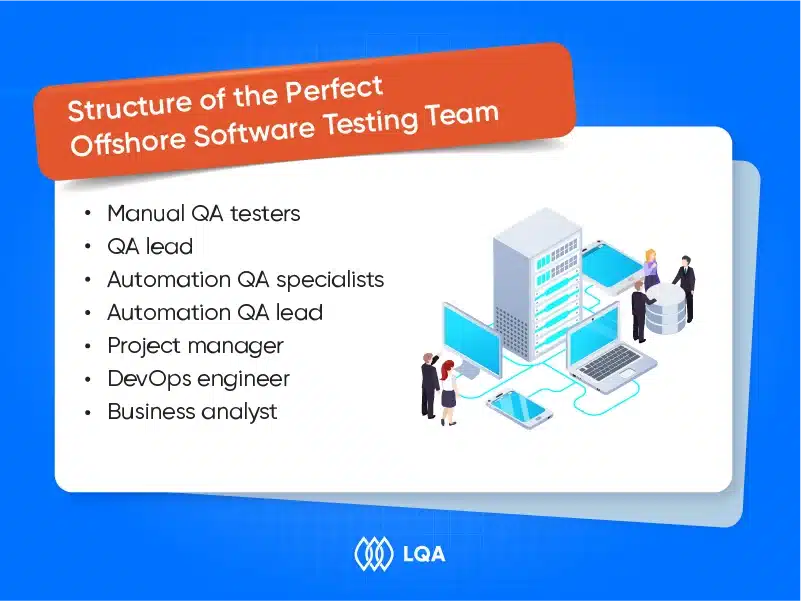
Structure of the Perfect Offshore Software Testing Team

Structure of the Perfect Offshore Software Testing Team

Manual QA testers

Manual testers are the backbone of most testing projects, handling a large portion of the workload. For mid-sized projects, a team of 3-5 manual QAs is generally sufficient.

QA lead

The QA lead manages the manual QA team, fostering effective communication and coordination. In some instances, this role may be filled by a senior member of the team, who also engages in hands-on testing activities while leading the group.

Automation QA specialists

Automation testers are indispensable for mid- to large-scale projects, particularly those that involve repetitive tests, such as regression testing. Automation specialists typically join the project after manual testers have made initial progress. In some cases, they may start earlier if preliminary tests have been completed by a prior team.

Automation QA lead

The automation QA lead supervises the automation QA team and also participates in numerous testing tasks. Often, the automation lead joins the project before the rest of the team to set up a strong foundation for subsequent work by the automation QAs.

Project manager (PM)

This key role acts as a liaison between the client and the vendor. While a PM can work on the vendor’s side, this arrangement is most suitable for larger projects that deliver services beyond testing. For most testing projects, having a PM on the client’s side is preferable.

DevOps engineer

Responsible for creating the necessary infrastructure, the DevOps engineer makes sure that both development and testing teams have everything they need to operate effectively without interruptions. While a DevOps engineer can work on the client’s side, having a dedicated DevOps engineer within the vendor’s organization often provides more advantages.

Business analyst (BA)

The business analyst gathers business data and insights to recommend pathways for organizational success. The involvement of a BA in a testing project—at least on a part-time basis—can significantly enhance the quality and outcome of the software produced.

In addition to these 7 roles in a testing team, the presence of a development team also greatly contributes to the success of a QA project. This is because without developers available to address bugs identified during testing, the offshore testing team may find itself limited to conducting only initial tests, leading to potential delays in the overall process. Many organizations benefit from harnessing two offshore teams—one for development and another for testing—or maintaining an in-house development team.

Also read: 

Key Considerations When Hiring an Offshore QA Testing Team

Whether a company requires a team for a short-term project or is looking to establish a long-term partnership, selecting the right offshore software testing company is a critical decision. Hiring offshore software testing teams without a well-thought-out process can lead to unsatisfactory outcomes.

To achieve successful and mutually beneficial QA collaboration, organizations should take into account 4 key factors as follows:

Key Considerations When Hiring an Offshore QA Testing Team

Key Considerations When Hiring an Offshore QA Testing Team

Expertise and experience

Evaluating the provider’s experience within a specific industry and with projects of similar scale holds significant importance. A partner with a background in the same sector or comparable projects is more likely to deliver results that align closely with future business requirements.

Besides, look for a team with a strong track record in testing methodologies and tools relevant to the project needs. Checking the offshore team’s proficiency with the latest QA technologies and methodologies also helps confirm the project benefits from advanced testing practices.

Additionally, versatility in testing approaches enhances the ability to adapt to differing project needs.

Communication and collaboration

Having clear and consistent communication forms the foundation of any successful partnership. Therefore, companies should prioritize offshore partners that demonstrate strong communication skills and use tools that seamlessly integrate with existing collaboration platforms like Slack and Microsoft Teams.

Security and compliance

Conducting a careful review of the vendor’s security protocols and their compliance with relevant data protection regulations is a must for safeguarding sensitive project data. One useful approach to gauge their handling of these matters is to reach out to the provider’s previous clients for insights.

Cost and pricing model

Rather than settling on the first option, businesses should explore various pricing models from multiple providers since it’s of great importance to opt for the offshore testing team whose pricing structure fits the organization’s budget and project needs.

For more tips on optimizing software testing costs, feel free to check out our blog about how much does software testing cost and how to optimize it.

Learn more: 

How to Make the Most of the Offshore Software Testing Team?

Choosing the right vendor and building a well-structured team are just the first steps. Continuous and efficient management of offshore testing partners is equally vital in maintaining the QA project’s desired quality.

Here are 5 key strategies to better manage offshore QA testing teams:
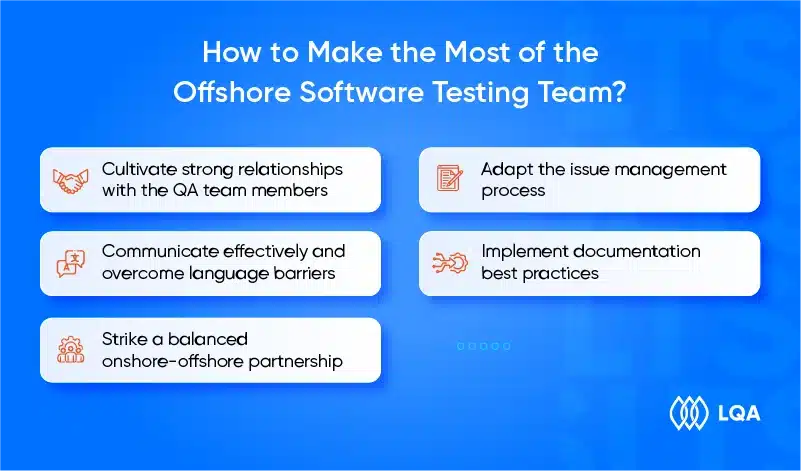
How to Make the Most of the Offshore Software Testing Team

How to Make the Most of the Offshore Software Testing Team?

Cultivate strong relationships with the QA team members

A strong rapport and a foundation of trust with the offshore testing team profoundly influence the project’s success.

Begin by building personal connections with them, learning their names, pronunciations, etc.

Encourage team members to create simple slides introducing themselves, including photos and basic information. This is especially helpful when integrating in-house and offshore QA teams.

A project manager might be just the right person to facilitate these connections and strengthen team dynamics.

Communicate effectively and overcome language barriers

Most offshore QA team members possess a good command of English, sufficient for handling technical documentation and day-to-day interactions.

Nevertheless, communication challenges might still arise, especially in offshore settings.

Regular team meetings, structured communication protocols, open discussions, and informal check-ins are a few ways to alleviate potential misunderstandings.

Strike a balanced onshore-offshore partnership

It’s not advisable to assign all testing tasks to offshore teams solely to reduce costs.

Instead, organizations should evaluate which testing activities can realistically be managed by offshore experts, taking into account the complexity of business processes and any access challenges related to testing systems.

This approach clarifies roles and responsibilities for both in-house and offshore teams, allowing for appropriate task assignments based on each team member’s strengths and expertise.

Adapt the issue management process

Using management tools for documenting and tracking defects is common practice, but many projects overlook the importance of effective issue management to address functional, technical, and business-related questions that an offshore quality assurance team may encounter during testing.

To optimize this process, companies should encourage the offshore testing team to utilize a robust web-based document management system.

In addition, don’t forget to leverage time zone differences since a significant time gap can be transformed into an opportunity for near-continuous testing operations and maximizing productivity.

Implement documentation best practices

Another helpful tip is maintaining proactive, clear, and thorough documentation. Starting this process early—even before project launch—enables all stakeholders to quickly access relevant materials to preempt or resolve possible misunderstandings.

Organizations should establish firm guidelines that encompass all areas of documentation: test scenarios, test scripts, execution procedures, results documentation, etc.

Choosing a suitable test management tool is based on the company’s specific needs, but accessibility across locations and proven effectiveness should top the list of criteria.

How Does Offshore Software Testing Operate At LQA?

LQA offers a host of offshore software testing services, ranging from software/hardware integration and mobile application testing to automation, web application, and embedded software testing.

We pride ourselves on providing access to top-tier Vietnamese QA engineers. Our commitment to quality is evident in our impressive track record: a leakage rate of just 0.02% and an average CSS point of 9/10.

Central to LQA’s success is a clearly defined workflow that enables our testing experts to approach each project systematically and efficiently.

Here’s a step-by-step look at our process:

How Does Offshore Software Testing Operate At LQA

How Does Offshore Software Testing Operate At LQA?

Step 1. Requirement analysis

Our skilled testing professionals start by gathering and analyzing the client’s requirements. This critical step allows us to customize the software testing lifecycle for maximum efficiency and formulate pragmatic approaches tailored to each project.

Step 2. Test planning

Once the LQA team completes the requirement analysis and planning phase, we clearly define the test plan strategy. This involves outlining resource allocation, test environment specifications, any anticipated limitations, and a detailed testing schedule.

Step 3. Test case development

Guided by the established test plan, our IT experts create, verify, and refine test cases and scripts, ensuring alignment with the project objectives.

Step 4. Test environment setup

LQA’s team meticulously determines the optimal software and hardware conditions for testing the IT product. If the development team has already defined the test environment, our testers perform a thorough readiness check or smoke testing to validate its suitability.

Step 5. Test execution

With over 8 years of experience in quality assurance, our dedicated testers execute and maintain test scripts, carefully documenting any identified bugs to guarantee the highest quality.

Step 6. Test cycle closure

After finishing the testing process, our offshore software QA team generates detailed reports, conducts open discussions on test completion metrics and outcomes, and identifies any potential bottlenecks to streamline subsequent test cycles.

Experience offshore software testing firsthand with LQA

Pros and Cons of Offshore Software Testing
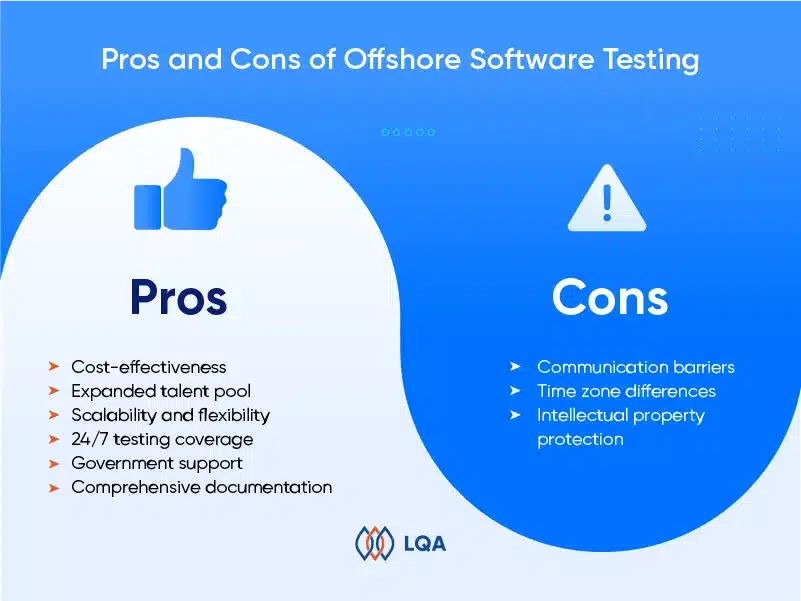
Pros and Cons of Offshore Software Testing

Pros and Cons of Offshore Software Testing

Pros

  • Cost-effectiveness: Lower labor costs in many offshore locations translate to significant budget savings.
  • Expanded talent pool: Organizations gain access to a global network of skilled testers with specialized offshore QA expertise.
  • Scalability and flexibility: Offshore teams can be adjusted quickly to accommodate evolving project needs, offering both short and long-term engagement options.
  • 24/7 testing coverage: Continuous testing support and faster iteration cycles are possible with round-the-clock operations.
  • Government support: Governments in many regions, including Southeast Asia and Eastern Europe, incentivize offshore partnerships with favorable tax incentives and legal frameworks.
  • Comprehensive documentation: Offshore testing services providers often adhere to rigorous documentation standards, providing transparency and reducing miscommunication risks.

Cons

  • Communication barriers: Language and cultural differences require proactive management to mitigate misunderstandings.
  • Time zone differences: Clear communication and potentially staggered schedules are necessary to bridge time gaps.
  • Intellectual property protection: Thorough due diligence and robust security measures are crucial when entrusting sensitive information to offshore software testing companies.

Future Trends in Offshore Software Testing

Software testing offshore is changing rapidly to keep pace with technological advancements and industry demands. While predicting the future with absolute certainty is impossible, several trends are likely to shape the industry moving forward.

Future Trends in Offshore Software Testing

Future Trends in Offshore Software Testing

  • Artificial intelligence & machine learning integration: Artificial intelligence and machine learning are expected to drive smarter automation, from test case creation and defect prediction to self-healing tests.
  • DevOps & agile integration: The integration of development and testing teams is becoming increasingly important for expediting release cycles and improving overall product quality. Offshore teams are poised to play a crucial role in continuous testing and feedback loops, carrying out a seamless development process that adapts to shifting requirements.
  • Blockchain in offshore software QA: Blockchain technology introduces secure, tamper-proof solutions for managing testing artifacts and data. By delivering trust and transparency in the testing process, blockchain can improve the integrity of testing operations, making it an attractive option for organizations seeking reliable and verifiable testing outcomes.

FAQs about Offshore Software Testing

What is offshore software testing?

Offshore software testing refers to delegating the software testing process to a service provider located in another country, often in a different time zone. Rather than maintaining an internal team for these tasks, companies collaborate with offshore partners to execute various testing functions.

When should I consider using offshore software testing?

Offshore software testing proves advantageous in many scenarios:

  • Large, complex, or long-term projects: When testing demands exceed internal resources.
  • Budget or time constraints: Accessing potentially lower labor costs and 24/7 testing coverage.
  • Focus on core competencies: Freeing up internal teams by delegating specialized testing.
  • Global market expansion: Leveraging expertise in testing for different languages and regions.
  • Access to cutting-edge trends: Tapping into providers at the forefront of testing innovations.

How do I choose the right offshore testing provider?

To choose the right offshore testing partner, conduct in-depth research and consider these essential factors:

  • Reputation & experience: Look for established providers with a proven track record and positive client testimonials.
  • Expertise & skills: Ensure the provider possesses the required technical skills and domain knowledge relevant to your project.
  • Quality assurance: Inquire about quality control measures, certifications, and adherence to industry best practices.
  • Tools & infrastructure: Verify access to the necessary testing tools, environments, and infrastructure.
  • Communication & culture: Prioritize clear communication, cultural fit, and a collaborative approach.

What are the key considerations for effective offshore software testing?

Successful offshore software testing depends on numerous factors.

  • Crystal-clear communication: Define project requirements, expectations, and timelines upfront.
  • Seamless collaboration: Maintain regular communication and leverage collaborative tools for progress monitoring.
  • Timely feedback loops: Establish a system for providing prompt and constructive feedback on testing results.
  • Strong partnership: Cultivate a relationship built on transparency, trust, and mutual understanding.

Final Thoughts about Offshore Software Testing

Engaging in offshore software testing brings numerous advantages for organizations. However, selecting the right team necessitates careful consideration of different factors, from expertise, communication, and security measures, to pricing structures.

By establishing a well-structured offshore software testing team and implementing the right strategies and best practices, firms can harness this approach to achieve superior software quality, quicker time-to-market, and greater cost efficiency.

For those seeking trustworthy, professional, and experienced offshore software testing services, LQA stands out as a top provider. With over 8 years of experience, we deliver high-quality and cost-effective software testing solutions to clients worldwide. Our offerings include quality assurance consulting and software testing implementation across a wide range of software testing services, such as software/hardware integration testing, mobile application testing, automation testing, web application testing, and embedded software testing.

Experience offshore software testing firsthand with LQA

Embedded TestingMobile AppWeb AppWeb App

How Much Does Software Testing Cost and How to Optimize It?

The need for stringent quality control in software development is undeniable since software defects can disrupt interconnected systems and trigger major malfunctions, leading to significant financial losses and damaging a brand’s reputation.

Consider high-profile incidents such as Nissan’s recall of over 1 million vehicles due to a fault in airbag sensor software or the software glitch that led to the failure of a $1.2 billion military satellite launch. In fact, according to the Consortium for Information and Software Quality, poor software quality costs US’ companies over $2.08 trillion annually.

Despite the clear need for effective quality control, many organizations find its cost to be a major obstacle. Indeed, a global survey of IT executives reveals that over half of the respondents view software testing cost as their biggest challenge. No wonder, companies increasingly look for solutions to reduce these costs without sacrificing quality.

In this article, we’ll discuss software testing cost in detail, from its key drivers and estimated amounts to effective ways to cut expenses wisely.

Let’s dive right in!

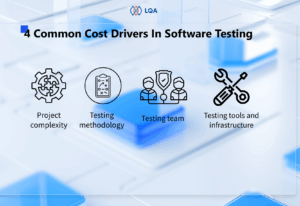
4 Common Cost Drivers In Software Testing

A 2019 survey of CIOs and senior technology professionals found that software testing can consume between 15% and 25% of a project’s budget, with the average cost hovering around 23%.

So, what drives these substantial costs in software testing? Read on to find out.

Common Cost Drivers In Software Testing

4 Common Cost Drivers In Software Testing

Project complexity

First and foremost, the complexity of a software project is a key determinant of testing costs.

Clearly, simple projects may require only minimal testing, whereas complex, multifaceted applications demand more extensive testing efforts. This is due to the fact that complex projects usually feature intricate codebases, numerous integration points, and a wide range of functionalities.

Testing methodology

The chosen testing methodology also plays a big role in defining testing costs.

Various methodologies, such as functional testing, non-functional testing, manual, and automated testing, carry different cost implications.

Automated testing, while efficient, requires an upfront investment in tools and scripting but can save time and resources in the long run since it can quickly and accurately execute repetitive test cases.

On the other hand, manual testing might be more cost-effective for smaller projects with limited testing requirements, yet may still incur ongoing expenses.

Dig deeper: Automation testing vs. manual testing: Which is the cost-effective solution for your firm?

Testing team

The testing team’s type and size are also big cost factors. This includes choosing between an in-house and outsourced team, as well as considering the number and expertise of the company’s testing professionals.

An in-house team requires budgeting for salaries, benefits, and training to ensure they have the necessary skills and expertise. Alternatively, outsourcing to third-party providers or working with freelance testers can reduce fixed labor costs but may introduce additional considerations like contract fees and potential language or time zone differences.

Learn more: 6 reasons to choose software testing outsourcing

Regarding team size and skills, obviously, larger teams or those with more experienced testers demand higher costs compared to smaller teams or those with less experienced staff.

Testing tools and infrastructure

Another factor that significantly contributes to the overall cost of software testing is testing tools and infrastructure.

Tools such as test management software, test automation frameworks, and performance testing tools come with their own expenses, from software licenses, training, and ongoing maintenance, to support fees.

For further insights, consider these resources:

As for testing infrastructure, it refers to the environment a company establishes to perform its quality assurance (QA) work efficiently. This includes hardware, virtual machines, and cloud services, all of which add up to the overall QA budget.

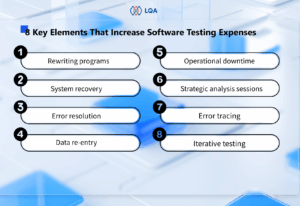
8 Key Elements That Increase Software Testing Expenses

Even with a well-planned budget, unexpected costs might still emerge, greatly increasing the expenses of software testing.

Below are 8 major elements that may cause a company’s testing expenses to rise:

Key Elements That Increase Software Testing Expenses

8 Key Elements That Increase Software Testing Expenses

  • Rewriting programs: When errors and bugs are detected in software, the code units containing these issues need to be rewritten. This process can extend both the time and cost associated with software testing.
  • System recovery: Failures during testing or software bugs can result in substantial expenditures related to system recovery. This includes restoring system functionality, troubleshooting issues, and minimizing downtime.
  • Error resolution: The process of identifying and resolving bugs, which often requires specialized resources, extensive testing, and iterative problem-solving, can add new costs to the testing budget.
  • Data re-entry: Inaccuracies found during testing often necessitate data re-entry, further consuming time and resources.
  • Operational downtime: System failures and errors can disrupt operational efficiency, leading to downtime that causes additional costs for troubleshooting and repairs.
  • Strategic analysis sessions: Strategic analysis meetings are necessary for evaluating testing strategies and making informed decisions. However, these sessions also contribute to overall testing costs through personnel, time, and resource expenditures.
  • Error tracing: Difficulty in pinpointing the root cause of software issues can lengthen testing efforts and inflate costs. This involves tracing errors back to their source, investigating dependencies, and implementing solutions accordingly.
  • Iterative testing: Ensuring that bug fixes do not introduce new issues often requires multiple testing rounds, known as iterative testing. Each iteration extends the testing timeline and budget as testers verify fixes and guarantee overall system stability.

How Much Does Software Testing Cost?

So, what’s the cost of software testing in the total development cost exactly?

It comes as no surprise that there’s no fixed cost of software testing since it varies based on lots of factors outlined above.

But here’s a quick breakdown of software testing cost estimation, based on location, testing type, and testing role:

  • Cost estimation of QA testers based on location
Location Rates
USA $35 to $45/ hour
UK $20 to $30/ hour
Ukraine $25 to $35/ hour
India $10 to $15/ hour
Vietnam $8 to $15/ hour

Learn more: Top 10 software testing companies in Vietnam in 2022

  • QA tester cost estimation based on type of testing
Type of testing Rates
Functional testing $15 to $30/ hour
Compatibility testing $15 to $30/ hour
Automation testing $20 to $35/ hour
Performance testing $20 to $35/ hour
Security testing $25 to $45/ hour
  • QA tester cost estimation based on their role
Type of tester Rates
Quality assurance engineer $25 to $30/ hour
Quality assurance analyst $20 to $25/ hour
Test engineer $25 to $30/ hour
Senior quality assurance engineer $40 to $45/ hour
Automation test engineer $30 to $35/ hour

How To Reduce Software Testing Costs?

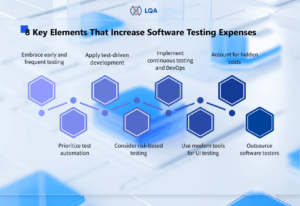
Since many companies are questioning how to reduce the cost of software testing, we’ve compiled a list of top 8 practical best practices to help minimize these costs without compromising quality and results. Check them out below!

How To Reduce Software Testing Costs

How To Reduce Software Testing Costs?

Embrace early and frequent testing

Testing should be an ongoing task throughout the development phase, not just at the project’s end.

Early and frequent testing helps companies detect and resolve bugs efficiently before they escalate into serious issues later on. Plus, post-release bugs are more detrimental and costly to fix, so addressing them early helps maintain code quality and control expenses.

Prioritize test automation

Test automation utilizes specialized software to execute test cases automatically, reducing the reliance on manual testing.

In fact, according to Venture Beat, 97% of software companies have already employed some level of automated testing to streamline repetitive, time-consuming QA tasks.

Although implementing test automation involves initial costs for tool selection, script development, and training, it ultimately leads to significant time and cost savings in the long term, particularly in projects requiring frequent updates or regression testing.

Learn more: Benefits of test automation: Efficiency, accuracy, speed, and ROI

Apply test-driven development

Test-driven development (TDD) refers to writing unit tests before coding. This proactive approach helps identify and address functionality issues early in the development process.

TDD offers several benefits, including cleaner code refactoring, stronger documentation, less debugging rework, improved code readability, and better architecture. Collectively, these advantages help reduce costs and enhance efficiency.

Consider risk-based testing

Risk-based testing prioritizes testing activities based on the risk of failure and the importance of each function.

By focusing on high-risk areas, this approach simplifies test planning and preparation according to the possibility of risks, which not only improves productivity but also makes the testing process more cost-effective.

Implement continuous testing and DevOps

DevOps focuses on combining development and operations, with testing embedded throughout the software development life cycle (SDLC).

When integrating testing into the DevOps pipeline like that, businesses can automate and execute tests continuously as new code is developed and integrated, thereby minimizing the need for expensive post-development testing phases.

Use modern tools for UI testing

Automating visual regression testing with modern, low-code solutions is an effective approach for UI testing.

These tools harness advanced image comparison, analyze and verify document object model (DOM) structure, on-page elements, and handle timeouts automatically. Thus, they allow for rapid UI tests – often in under five minutes – without requiring extensive coding.

In the long run, this practice saves considerable resources, reduces communication gaps among developers, analysts, testers, and enhances the development process’ overall efficiency.

Account for hidden costs

Despite efforts to manage and reduce software testing expenses, unexpected hidden costs can still arise.

For instance, software products with unique functionalities often require specialized testing tools and techniques. In such instances, QA teams may need to acquire new tools or learn specific methodologies, which can incur additional expenses.

Infrastructure costs can also contribute to hidden costs, including fees for paid and open-source software used in automated testing, as well as charges for cloud services, databases, and servers.

Furthermore, updates to testing tools might cause issues with existing code, necessitating extra time and resources from QA engineers.

Outsource software testers

For companies lacking the necessary personnel, skills, time, or resources for effective in-house testing, outsourcing is a viable alternative.

Outsourcing enables access to a broader pool of skilled testers, specialized expertise, and cost efficiencies, particularly in regions with lower labor costs, such as Vietnam.

However, it’s important for businesses to carefully evaluate potential outsourcing partners, establish clear communication channels, and define service-level agreements (SLAs) to ensure the quality of testing services.

For guidance on selecting the right software testing outsourcing partner, check out our resources on the subject:

At LQA – Lotus Quality Assurance, we offer a wide range of testing services, from software and hardware integration testing, mobile application testing, automation testing, web application testing, to embedded software testing and quality assurance consultation. Our tailored testing models are designed to enhance software quality across various industries.

Contact LQA for reliable and cost-effective software testing

4 Main Categories of Software Testing Costs

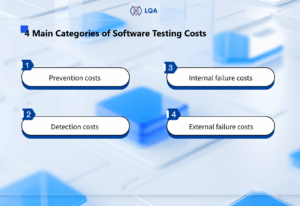
Software testing expenses generally fall into four primary categories:

4 Main Categories of Software Testing Costs

4 Main Categories of Software Testing Costs

  • Prevention costs

Prevention costs refer to proactive investments aimed at avoiding defects in the software. These costs typically include training developers to create maintainable and testable code or hiring developers with these skills. Investing in prevention helps minimize the likelihood of defects occurring in the first place.

  • Detection costs

Detection costs are related to developing and executing test cases, as well as setting up environments to identify bugs. This involves creating, running tests, and simulating real-world scenarios to uncover issues early. Investing in detection plays a big role in finding and addressing problems before they escalate, helping prevent more severe issues later on.

  • Internal failure costs

These costs are incurred when defects are found and corrected before the product is delivered. They encompass the resources and efforts needed to debug, rework code, and conduct additional testing. While addressing bugs internally helps prevent issues from reaching end users, it still causes significant expenses.

  • External failure costs

External failure costs arise when technical issues occur after the product has been delivered due to compromised quality. External failure costs can be substantial, covering customer support, warranty claims, product recalls, and potential damage to the company’s reputation.

In general, the cost of defects in software testing accounts for a major portion of the total testing expenses, even if no bugs are found. Ensuring these faults are addressed before product delivery is of great importance for saving time, reducing costs, and maintaining a company’s reputation. By carefully planning and evaluating testing activities across these categories, organizations can develop a robust testing strategy that ensures maximum confidence in the final product.

FAQs about Software Testing Cost

Is performing software testing necessary?

Absolutely! Software testing is essential for identifying and eliminating costly errors that could adversely affect both performance and user experience. Effective testing also covers security assessments to detect and address vulnerabilities, which prevents customer dissatisfaction, business loss, and damage to the brand’s reputation.

How to estimate the cost of software testing?

To estimate the cost of software testing, companies need to break down expenses into key categories for clearer budget allocation.

These categories typically include:

  • Personnel costs: This covers the salaries, benefits, and training expenses for testing team members, including testers, test managers, and automation engineers.
  • Infrastructure costs: These costs encompass hardware, software, and cloud services needed for testing activities, such as server hardware, virtual machines, test environments, and third-party services.
  • Tooling costs: For smaller projects, open-source testing tools may suffice, while larger projects might require premium tool suites, leading to higher expenses.

How much time do software testers need to test software solutions?

The duration of software testing projects varies based on lots of factors, from project requirements, the software’s type and complexity, to features and functionalities included and the testing team’s size.

Final Thoughts about Software Testing Cost

Software testing is a pivotal phase in the SDLC, and understanding its costs can be complex without precise project requirements and a clearly defined scope. Once the technology stack and project scope are established, organizations can better estimate their software testing costs.

For effective software testing cost reduction, companies can explore several strategies. Some of them are implementing early and frequent testing, leveraging test automation, adopting risk-based testing, and integrating testing into the DevOps pipeline. Additionally, outsourcing testing can offer significant cost benefits.

At LQA, we provide comprehensive software testing solutions designed to be both high-quality and cost-effective. Rest assured that your software is free of bugs, user-friendly, secure, and ready for successful deployment.

Contact LQA for reliable and cost-effective software testing

Education

[Data Annotation] Apply segmentation techniques to annotate automotive datasets 

What the client needs 

To gain a competitive edge in the autonomous vehicle race, the demand for high-quality data annotation services for AI models is rapidly increasing. So, it is one of the main reasons why our clients are seeking a data annotation vendor capable of delivering their data annotation project results with an accuracy rate of 98% and above. 

How we did it 

With an 8-year track record in data annotation for the ADAS industry, we swiftly assembled a team of 38 professionals, including project managers, reviewers, and annotators. The recruitment process was completed within 1-2 weeks, followed by an intensive training program to meet strict project deadlines. Thanks to the team’s seamless collaboration, we successfully annotated 26,000 images within six months. 

In this project, we used panoptic segmentation to annotate over 40 data categories, including vehicles, pedestrians, obstacles, traffic signs, traffic lights, roads, sky, and more. After a training period, our team members continuously improved their quality and completed the project with impressive results. We not only finished the project ahead of schedule but also impressed the client with an error rate of less than 1%. The best news is that the client has invited us to participate in the next phase of the project’s expansion.  

What the results have 

  • 26,000 images annotated in 6 months 
  • Achieved an accuracy rate of 99.4% 
  • Used panoptic segmentation technique to annotate over 40 data categories 

Automated TestingManual TestingWeb App

Understanding Agile Testing: Life Cycle, Strategy, and More

Agile software development adopts an incremental approach to building software, and agile testing methodology follows suit by incrementally testing features as they are developed. Despite agile’s widespread adoption—reportedly used by 71% of companies globally—many organizations, especially those in regulated industries needing formal documentation and traceability, still rely on waterfall or hybrid development models. Meanwhile, some teams are currently transitioning to agile methodologies.

No matter where your organization stands in the agile journey, this article aims to provide a comprehensive understanding of agile testing fundamentals, from definition, advantages, and life cycle, to effective strategy.

Without further ado, let’s dive right into it!

What is Agile Testing?

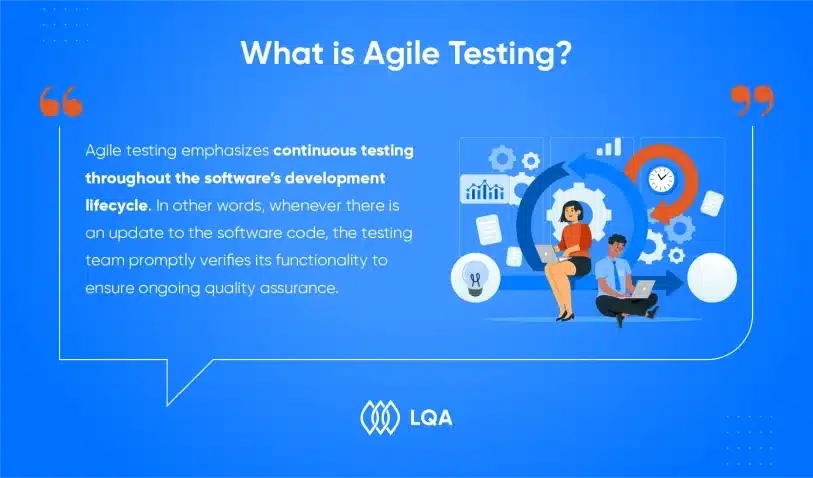
Agile testing is a form of software testing that follows agile software development principles. It emphasizes continuous testing throughout the software’s development life cycle (SDLC). Essentially, whenever there is an update to the software code, the agile testing team promptly verifies its functionality to ensure ongoing quality assurance.

What is Agile Testing

What is Agile Testing

In traditional development, testing occurred separately after the coding phase.

In agile, however, testing is an ongoing process, positioning testers between product owners and developers. This arrangement creates a continuous feedback loop, aiding developers in refining their code.

Two key components of agile software testing are continuous integration and continuous delivery.

Continuous integration involves developers integrating their code changes into a shared repository multiple times a day. Meanwhile, continuous delivery ensures that any change passing all tests is automatically deployed to production.

The primary motivation for adopting agile methodology in software testing is its cost and time efficiency. By relying on regular feedback from end users, agile testing addresses a common issue where software teams might misinterpret features and develop solutions that do not meet user requirements. This approach ensures that the final product closely aligns with user needs and expectations.

Agile Testing Life Cycle       

The testing life cycle in agile operates in sync with the overall agile software development life cycle, focusing on continuous testing, collaboration, and enhancement.

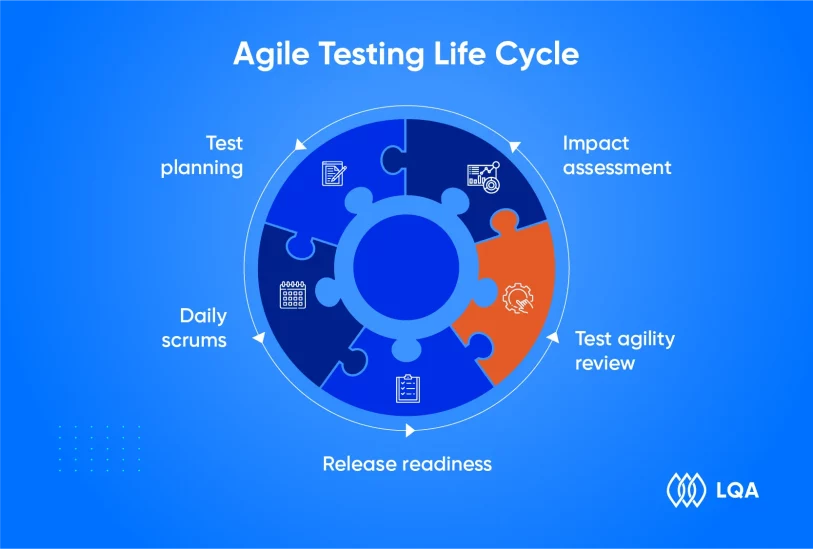
Essentially, it comprises 5 key phases, with objectives outlined below:

Agile Testing Life Cycle

Agile Testing Life Cycle

Test planning

  • Initial preparation: At the outset of a project is agile test planning, with testers working closely with product owners, developers, and stakeholders to fully grasp project requirements and user stories.
  • User story analysis: Testers examine user stories to define acceptance criteria and establish test scenarios, ensuring alignment with anticipated user behavior and business goals.
  • Test strategy: Based on the analysis, testers devise a comprehensive test strategy that specifies test types (unit, integration, acceptance, etc.,), tools, and methodologies to be employed.
  • Test estimation: For effective test planning, it’s necessary for your team to estimate testing efforts and resources required to successfully implement each sprint of the strategy.

Check out How to create a test plan: Components, steps and template for further details.

Daily scrums (stand-ups)

  • Collaborative planning: Daily scrum meetings, also known as stand-ups, facilitate synchronized efforts between development and testing teams, enabling them to review progress and plan tasks collaboratively.
  • Difficulty identification: Testers use stand-ups to raise testing obstacles, such as resource limitations and technical issues, that may impact sprint goals.
  • Adaptation: Stand-ups provide an opportunity to adapt testing strategies based on changes in user stories or project priorities decided in the sprint planning meeting.

Release readiness

  • Incremental testing: Agile encourages frequent releases of the product’s potentially shippable increments. Release readiness testing ensures each increment meets stringent quality standards and is deployment-ready.
  • Regression testing: Prior to release, regression testing in agile is conducted to validate that new features and modifications do not adversely impact existing functionalities.
  • User acceptance testing (UAT): Stakeholders engage in UAT to verify software compliance with business requirements and user expectations before final deployment.

Test agility review

  • Continuous evaluation: This refers to regular review sessions throughout the agile testing life cycle to assess the agility of testing processes and their adaptability to evolving requirements.
  • Quality assessment: Test agility reviews help gauge the effectiveness of test cases in identifying defects early in the development phase.

Learn more: Guide to 5 test case design techniques with examples

  • Feedback incorporation: Stakeholder, customer, and team feedback is all integrated to refine testing approaches, aiming to enhance overall quality assurance practices.

Impact assessment

  • Change management: Change management in agile involves frequent adaptations to requirements, scope, or priorities. The impact assessment examines how these changes impact existing test cases, scripts, and overall testing efforts.
  • Risk analysis: Testers examine possible risks associated with changes to effectively prioritize testing tasks and minimize risks.
  • Communication: Impact assessment necessitates clear communication among development, testing, and business teams to ensure everyone comprehends the implications of changes on project timelines and quality goals.

4 Essential Components of an Agile Testing Strategy

In traditional testing, the process heavily relies on comprehensive documentation.

However, the testing process in agile prioritizes software delivery over extensive documentation, allowing testers to adapt quickly to changing requirements.

Therefore, instead of detailing every activity, teams should develop a test strategy that outlines the overall approach, guidelines, and objectives.

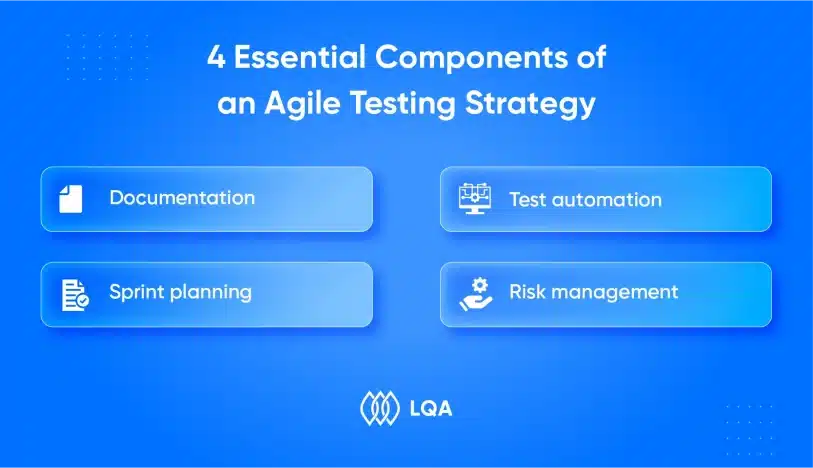
While there is no one-size-fits-all formula due to varying team backgrounds and resources, here are 4 key elements that should be included in an agile testing strategy.

Essential Components of an Agile Testing Strategy

Essential Components of an Agile Testing Strategy

Documentation

The first and foremost element of an agile testing strategy is documentation.

The key task here is finding the right balance—providing enough detail to serve its purpose without overloading or missing important information.

Since testing in agile is iterative, quality assurance (QA) teams must create and update a test plan for each new feature and sprint.

Generally, the aim of this plan is to minimize unnecessary information while capturing essential details needed by stakeholders and testers to effectively execute the plan.

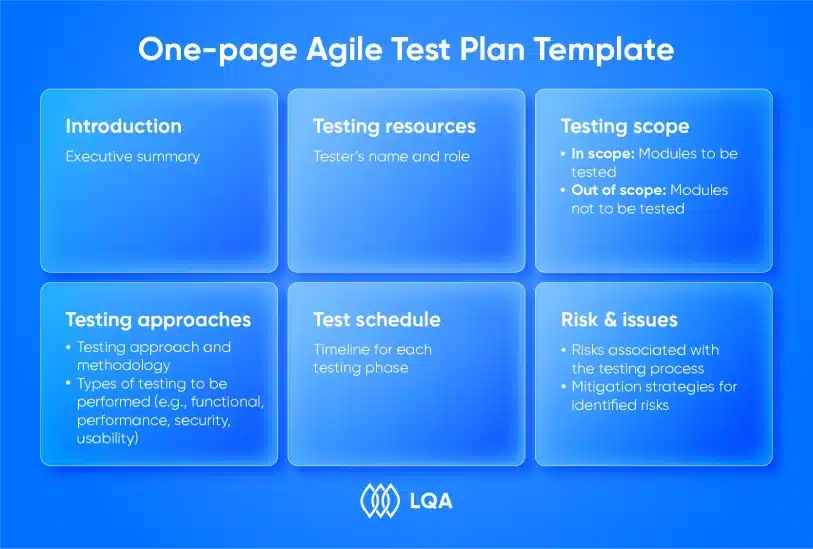
A one-page agile test plan template typically includes the following sections:

One-page agile test plan template

One-page agile test plan template

Sprint planning 

In agile testing, it’s crucial for a team to plan their work within time-boxed sprints.

Timeboxing helps define the maximum duration allocated for each sprint, creating a structured framework for iterative development.

Within Scrum – a common agile framework, a sprint typically lasts for one month or less, during which the team aims to achieve predefined sprint goals.

This time-bound approach sets a rhythm for consistent progress and adaptability, fostering a collaborative and responsive environment that aligns with agile principles.

Apart from sprint duration, during sprint planning, a few key things should be factored in:

  • Test objectives based on user stories
  • Test scope and timeline
  • Test types, techniques, data, and environments

Test automation

Test automation is integral to agile testing as it enables teams to quickly keep pace with the rapid development cycles of agile methodology.

But, one important question arises: which tests should be automated first?

Below is a list of questions to help you prioritize better:

  • Will the test be repeated?
  • Is it a high-priority test or feature?
  • Does the test need to run with multiple datasets or paths?
  • Is it a regression or smoke test?
  • Can it be automated with the existing tech stack?
  • Is the area being tested prone to change?
  • Can the tests be executed in parallel or only sequentially?
  • How expensive or complicated is the required test architecture?

Deciding when to automate tests during sprints is another crucial question to ask. Basically, there are two main approaches:

  • Concurrent execution: Automating tests alongside feature development ensures immediate availability of tests, facilitating early bug detection and prompt feedback.
  • Alternating efforts: Automating tests in subsequent sprints following feature development allows developers to focus on new features without interruption but may delay the availability of agile automated testing.

The choice between these approaches should depend on your team dynamics, project timelines, feature complexity, team skill sets, and project requirements. In fact, agile teams may opt for one approach only or a hybrid based on project context and specific needs.

Dig deeper into automation testing:

Risk management

Conducting thorough risk analysis before executing tests boosts the efficiency of agile testing, making sure that resources are allocated effectively and potential pitfalls are mitigated beforehand.

Essentially, tests with higher risk implications require greater attention, time, and effort from your QA team. Moreover, specific tests crucial to certain features must be prioritized during sprint planning.

Contact LQA for expert agile testing solutions

Contact LQA for expert agile testing solutions

Agile Testing Quadrants Explained

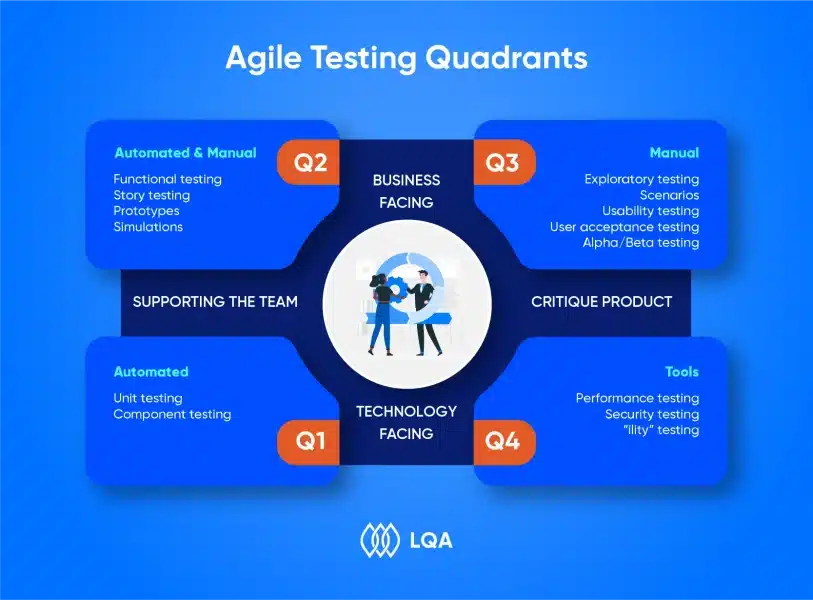
The agile testing quadrant, developed by Brian Marick, is a framework that divides the agile testing methodology into four fundamental quadrants.

By categorizing tests into easily understood dimensions, the agile testing quadrant enables effective collaboration and clarity in the testing process, facilitating swift and high-quality product delivery.

At its heart, the framework categorizes tests along two dimensions:

  • Tests that support programming or the team vs. tests that critique the product
  • Tests that are technology-facing vs. tests that are business-facing

But first, here’s a quick explanation of these terms:

  • Tests that support the team: These tests help the team build and modify the application confidently.
  • Tests that critique the product: These tests identify shortcomings in the product or feature.
  • Tests that are technology-facing: These are written from a developer’s perspective, using technical terms.
  • Tests that are business-facing: These are written from a business perspective, using business terminology.

Agile Testing Quadrants Explained

Agile Testing Quadrants Explained

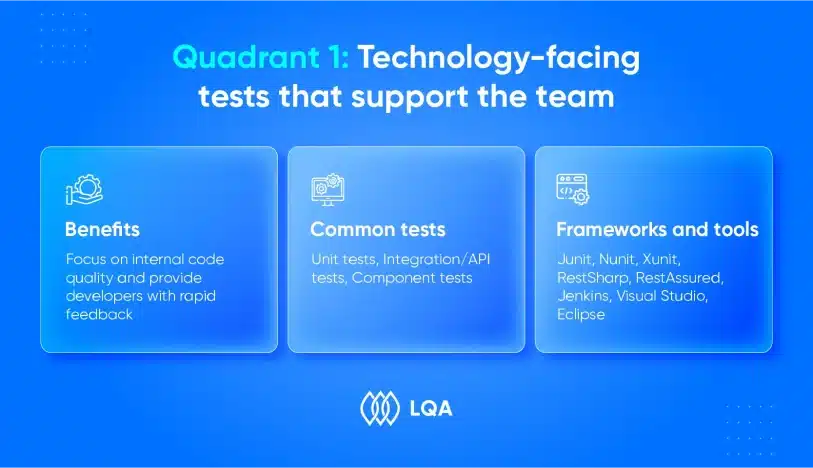
Quadrant 1: Technology-facing tests that support the team

Quadrant 1 includes technology-driven tests performed to support the development team. These tests, primarily automated, focus on internal code quality and provide developers with rapid feedback.

Common tests in this quadrant are:

  • Unit tests
  • Integration/API tests
  • Component tests

These tests are quick to execute, easy to maintain, and essential for Continuous Integration and Continuous Deployment (CI/CD) environments.

Some example frameworks and agile testing tools used in this quadrant are Junit, Nunit, Xunit, RestSharp, RestAssured, Jenkins, Visual Studio, Eclipse, etc.

Quadrant 1 Technology-facing tests that support the team

Quadrant 1: Technology-facing tests that support the team

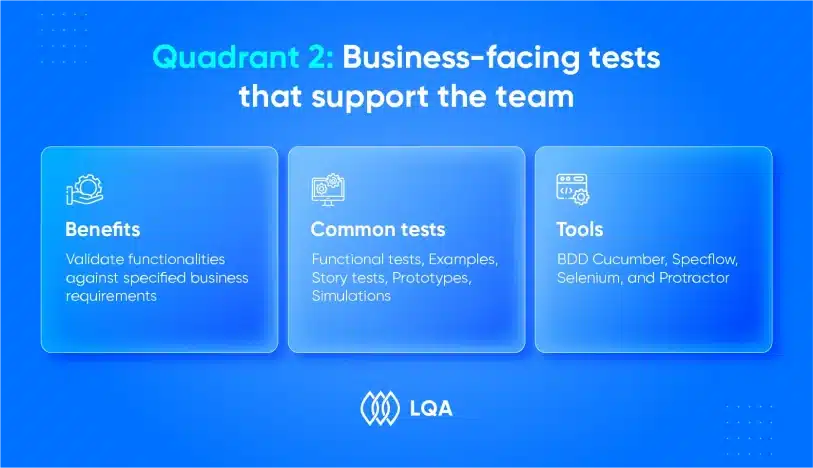
Quadrant 2: Business-facing tests that support the team

Quadrant 2 involves business-facing tests aimed at supporting the development team. It blends both automated and manual testing approaches, seeking to validate functionalities against specified business requirements.

Tests in Q2 include:

Here, skilled testers collaborate closely with stakeholders and clients to ensure alignment with business goals.

Tools like BDD Cucumber, Specflow, Selenium, and Protractor can help facilitate the efficient execution of tests in this quadrant.

Quadrant 2 Business-facing tests that support the team

Quadrant 2: Business-facing tests that support the team

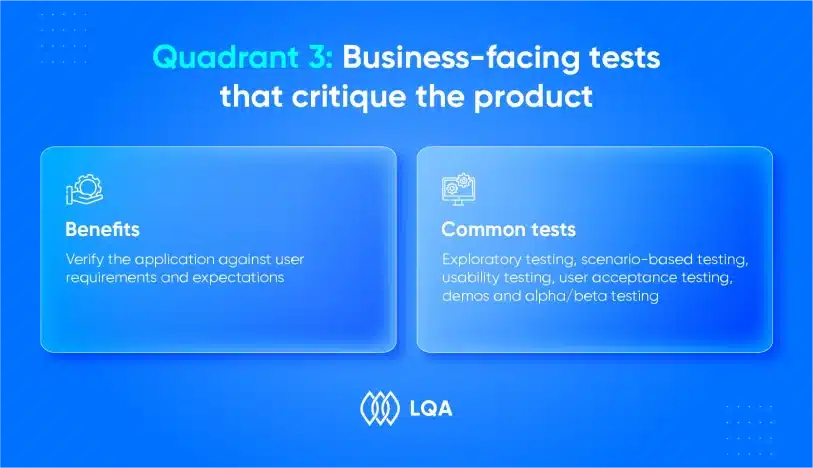
Quadrant 3: Business-facing tests that critique the product

Quadrant 3 comprises tests that assess the product from both a business and user acceptance perspective. These tests are crucial for verifying the application against user requirements and expectations.

Manual agile testing methods are predominantly used in this quadrant to conduct:

  • Exploratory testing
  • Scenario-based testing
  • Usability testing
  • User acceptance testing
  • Demos and alpha/beta testing

Interestingly, during UAT, testers often collaborate directly with customers to guarantee the product meets user needs effectively.

Quadrant 3 Business-facing tests that critique the product

Quadrant 3: Business-facing tests that critique the product

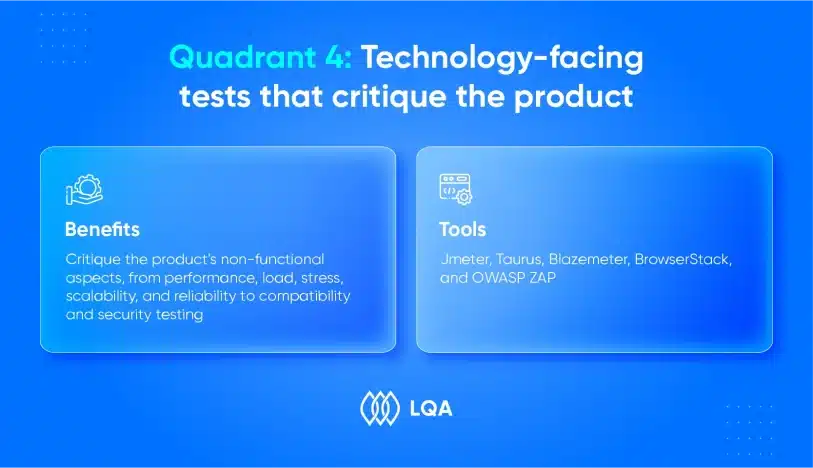
Quadrant 4: Technology-facing tests that critique the product

Quadrant 4 focuses on technology-driven tests that critique the product’s non-functional aspects, covering from performance, load, stress, scalability, and reliability to compatibility and security testing.

Automation tools to run such non-functional tests include Jmeter, Taurus, Blazemeter, BrowserStack, and OWASP ZAP.

All in all, these four quadrants serve as a flexible framework for your team to efficiently plan testing activities. However, it’s worth noting that there are no strict rules dictating the order in which quadrants should be applied and teams should feel free to adjust based on project requirements, priorities, and risks.

Quadrant 4 Technology-facing tests that critique the product

Quadrant 4: Technology-facing tests that critique the product

Advantages of Agile Testing

Agile testing offers a host of benefits that seamlessly integrate with the agile development methodology.

Advantages of Agile Testing

Advantages of Agile Testing

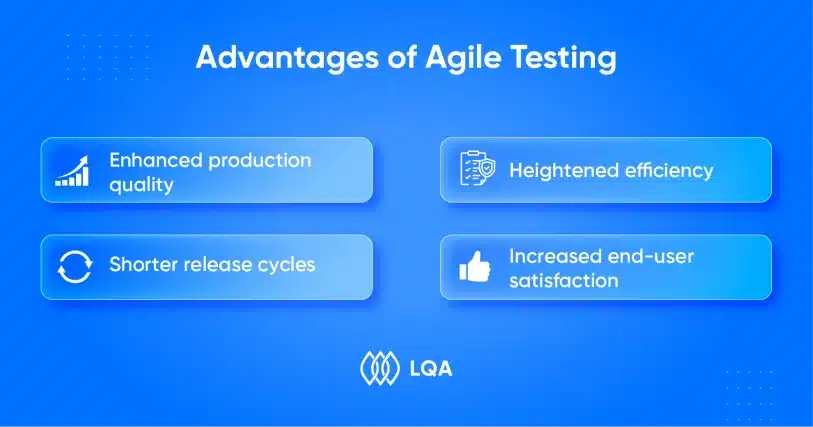
  • Shorter release cycles

Unlike traditional development cycles, where products are released only after all phases are complete, agile testing integrates development and testing continuously. This approach ensures that products move swiftly from development to deployment, staying relevant in a rapidly evolving market.

  • Higher quality end product

Agile testing enables teams to identify and fix defects early in the development process, reducing the likelihood of bugs making it to the final release.

  • Improved operational efficiency

Agile testing eliminates idle time experienced in linear development models, where testers often wait for projects to reach the testing phase. By parallelizing testing with development, agile maximizes productivity, enabling more tasks to be accomplished in less time.

  • Enhanced end-user satisfaction

Agile testing prioritizes rapid delivery of solutions, meeting customer demands for timely releases. Continuous improvement cycles also ensure that applications evolve to better meet user expectations and enhance overall customer experience.

FAQs about Agile Testing

What is agile methodology in testing?

Agile testing is a form of software testing that follows agile software development principles. It emphasizes continuous testing throughout the software’s development lifecycle. Essentially, whenever there is an update to the software code, the testing team promptly verifies its functionality to ensure ongoing quality assurance.

What are primary principles of agile testing?

When implementing agile testing, teams must uphold several core principles as follows:

  • Continuous feedback
  • Customer satisfaction
  • Open communication
  • Simplicity
  • Adaptability
  • Collaboration

What are some common types of testing in agile?

Five of the most widely adopted agile testing methodologies in current practice are:

  • Test-driven development
  • Acceptance test-driven development
  • Behavior-driven development
  • Exploratory testing
  • Session-based testing

What are key testing metrics in agile?

Agile testing metrics help gauge the quality and effectiveness of testing efforts. Here are some of the most important metrics to consider:

  • Test coverage
  • Defect density
  • Test execution progress
  • Test execution efficiency
  • Cycle time
  • Defect turnaround time
  • Customer satisfaction
  • Agile test velocity
  • Escaped defects

Final Thoughts about Agile Testing

Agile testing aligns closely with agile software development principles, embracing continuous testing throughout the software lifecycle. It enhances product quality and enables shorter release cycles, fostering customer satisfaction through reliable, frequent releases.

While strategies may vary based on team backgrounds and resources, 4 essential elements that should guide agile testing strategies are documentation, sprint planning, test automation, and risk management.

Also, applying the agile testing quadrants framework can further streamline your team’s implementation.

At LTS Group, we boast a robust track record in agile testing—from mobile and web applications to embedded software and automation testing. Our expertise is validated by international certifications such as ISTQB, PMP, and ISO, underscoring our commitment to excellence in software testing.

Should you have any projects in need of agile testing services, drop LQA a line now!

Contact LQA for expert agile testing solutions

Contact LQA for expert agile testing solutions


Finance

Machine Learning Basics Everyone Should Know

There are many variations of passages of Lorem Ipsum available, but the majority have suffered alteration in some form, by injected humour, or randomised words which don’t look even slightly believable. As students across the globe continue to see their learning plans significantly.

The basic premise of search engine reputation management is to use the following three strategies to accomplish the goal of creating a completely positive first page of search engine results for a specific term.

Make it Great!

There are many variations of passages of Lorem Ipsum available, but the majority have suffered alteration in some form, by injected humour, or randomised words which don’t look even slightly believable. As students across the globe continue to see their learning plans significantly.

Conclusion

There are many variations of passages of Lorem Ipsum available, but the majority have suffered alteration in some form, by injected humour, or randomised words which don’t look even slightly believable. As students across the globe continue to see their learning plans significantly.

News

Cybersecurity Trends: 8 Emerging Trends to Watch Out in 2024

Cybersecurity is the art of safeguarding networks, devices, and data from unauthorized access or misuse, ensuring information remains confidential, intact, and accessible.

While cybersecurity isn’t a new concept, it’s on the cusp of significant changes in 2024. Cyber threats are not only increasing in frequency but also growing more sophisticated, fueled by the widespread adoption of artificial intelligence (AI), machine learning (ML), and IoT. This calls for fresh protection strategies from stakeholders.

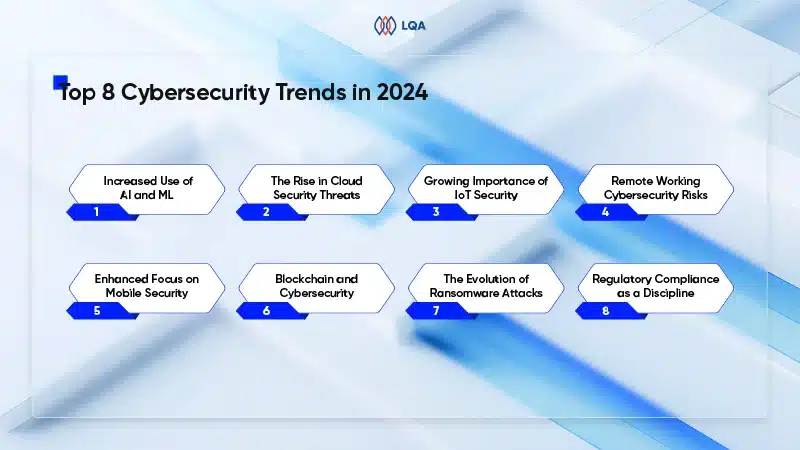
Here are 8 cybersecurity trends for 2024 that your organization should take note of.

8 cybersecurity trends for 2024Increased Use of AI and ML

AI in cyber threat detection

As the frequency of modern security threats continues to surge, relying solely on human intervention for cybersecurity is no longer sufficient. Consequently, more and more businesses are leveraging the power of AI and ML to fortify their security frameworks.

The benefits are tangible: organizations that experienced data breaches but had fully integrated AI technology saved an average of $1.76 million in 2023.

Looking ahead to 2024, AI and ML will take on even greater significance in the realm of cybersecurity.

Increased Use of AI and ML

AI has already proven instrumental in crafting automated security protocols, deciphering natural language, recognizing faces, and swiftly identifying potential threats.

Its sophisticated data analysis capabilities are becoming indispensable for preempting and detecting new cyber threats early on. By continuously analyzing risks, AI tools can promptly flag suspicious user behavior, abnormal login attempts, and irregular network activities.

In addition, the advent of AI-driven security bots seems imminent, programmed to autonomously detect and thwart cyber threats, fostering a more proactive approach to network security.

Meanwhile, ML algorithms are constantly evolving to improve their ability to identify and counteract emerging threats, thereby bolstering defensive measures with time. It’s foreseeable that ML will progress to autonomously adapt and refine cybersecurity protocols, reducing the need for manual updates.

AI-powered cyberattacks

On the flip side of AI’s potential for reinforcing threat detection is its exploitation by cybercriminals.

Hackers are increasingly harnessing AI to automate their attacks, employing tactics such as data poisoning and model stealing. Examples of such malicious activities include

  • automated phishing attempts,
  • malevolent chatbots,
  • the utilization of adversarial ML algorithms to disrupt operations and tamper with data integrity.

With the aid of AI, criminals can devise advanced malware and sophisticated attack strategies. They train AI models with pilfered data and then adopt various AI tools to dissect stolen data and extract sensitive information. This makes it much easier for cybercriminals and hackers to successfully carry out data breaches and ransomware attacks.

Furthermore, the advent of generative AI (GenAI) allows attackers to execute campaigns at scale, targeting a vast array of individuals with highly personalized and convincing emails. Access to personal information such as names, organizations, job titles, departments, or even health data helps attackers tailor their attacks with unprecedented precision, posing a significant challenge to cybersecurity professionals.

The Rise in Cloud Security Threats

The next cybersecurity threat trend is cloud vulnerability. The widespread adoption of remote work, especially post-pandemic, has accelerated the need for cloud-based services and infrastructure, bringing along security concerns for organizations. Indeed, approximately 20% of data breaches within companies are attributed to remote workers utilizing cloud-based platforms.

Alongside data breaches, businesses grapple with various network security trends and cloud security challenges, including:

  • ensuring compliance with regulations across different jurisdictions
  • seeking adequate IT expertise to manage the complexities of cloud computing
  • addressing challenges in cloud migration
  • managing an increased number of potential entry points for cyber attackers
  • tackling insider threats, whether accidental or deliberate, stemming from unauthorized remote access, weak passwords, insecure networks, and misuse of personal devices.

According to Deloitte’s annual cybersecurity threat report, Software-as-a-Service (SaaS) and cloud-based storage services were the most targeted cloud environments in 2023, accounting for 39% and 36% of attacks, respectively. Deloitte’s Cyber Threat Intelligence (CTI) also revealed specific threat vectors in the cloud, including unmanaged attack surfaces, human error, and misconfigurations.

One effective strategy to counter this cyber attack trend is Zero Trust. One of the prominent advantages of this approach lies in its efficacy in mitigating insider threats and thwarting lateral movement of attackers within a network.

At its core, Zero Trust operates on the principle of “never trust, always verify”.

In a zero-trust model, every access request is treated as a potential threat, regardless of its source or network. This approach requires stringent identity verification, tight access controls, and continuous monitoring of network activities.

Typically, once implementing Zero Trust, your organization has to take into account numerous cybersecurity aspects, from user authentication, and endpoint security, to the principle of least privilege access.

Growing Importance of IoT Security

The Internet of Things (IoT) refers to physical objects equipped with sensors and actuators that connect to computer systems through wired or wireless networks, enabling digital monitoring or control of the physical world.

Common examples of IoT devices include fitness trackers, smart refrigerators, smartwatches, and voice assistants like Amazon Echo and Google Home. It’s projected that by 2026, there will be 64 billion IoT devices worldwide.

However, the growing number of IoT devices poses numerous security challenges.

To be specific, the diversity and widespread usage of these devices make them attractive targets for cyberattacks, and their interconnected nature can lead to extensive vulnerabilities.

The proliferation of these devices also expands what’s known as the cyber-attack surface – the potential entry points for malicious actors. In addition, unlike laptops and smartphones, most IoT devices have limited processing and storage capabilities, making it difficult to implement conventional security measures like firewalls and antivirus software.

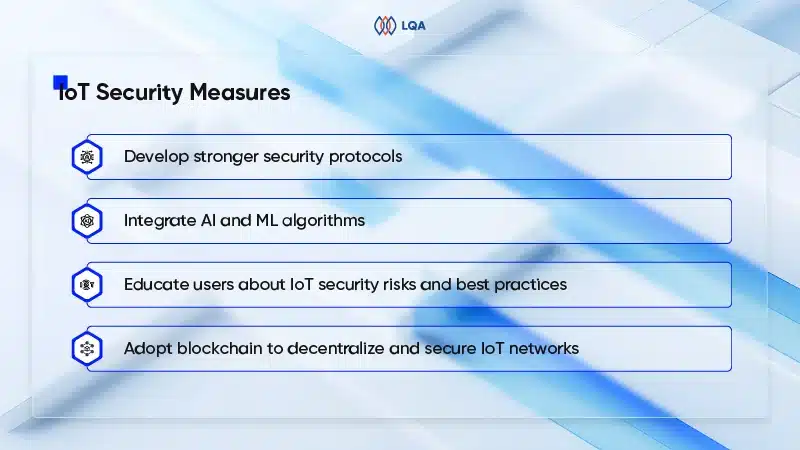
In response, 2024 will witness a concerted effort to bolster IoT security through various means.

IoT Security Measures

One significant advancement will be the development of stronger, standardized security protocols for IoT devices, potentially including universal encryption standards and mandatory security certifications.

Plus, there’ll be a growing focus on integrating AI and ML algorithms and blockchain technology into IoT systems to detect unusual patterns indicative of breaches and enable rapid threat response.

An increased emphasis on educating users about IoT security risks and best practices is also expected to lead the trend in 2024 within organizations.

At LQA, we specialize in delivering top-notch embedded software testing services globally. Our expert testers meticulously examine sensor functionality, network security systems, and other aspects of IoT devices, ensuring compliance with robust and standardized security protocols. Whether it’s sensor testing, network testing, or industrial protocol testing, rest assured, we have the expertise to ensure the secure and seamless operation of your organization’s IoT system.

Conduct embedded software testing with LQA

Remote Working Cybersecurity Risks

Remote work continues to reshape the business and cybersecurity landscape in 2024. According to Upwork, over 35 million Americans are expected to work remotely by the end of 2025, marking an 87% increase from pre-pandemic levels. However, this trend comes with its own set of cybersecurity risks.

Chances are most home offices lack the robust security measures found in centralized offices, such as secure firewalls, routers, and managed access controls. As a result, adapting to remote work setups may lead to less stringent security measures, giving cybercriminals opportunities to exploit vulnerabilities.

Besides, many employees use personal devices for work-related tasks and this blurring of personal and professional boundaries heightens the risk of sensitive information being compromised.

Hence, it’s crucial for organizations to prioritize addressing the security challenges posed by distributed workforces. This involves:

  • constantly identifying and mitigating emerging security vulnerabilities
  • updating systems
  • implementing security controls
  • ensuring proper monitoring and documentation.

We also highly recommend your business invest in Identity and Access Management Tools (IAM) to further mitigate risks and improve operational management. With IAM solutions, companies can easily analyze user activities, streamline secure sign-in processes based on corporate norms, and prompt users for additional authentication when needed.

Enhanced Focus on Mobile Security

In 2024, the growing reliance on mobile devices for remote work, financial transactions, personal communication, etc. is forecasted to make them prime targets for cyber threats.

In general, mobile threats encompass:

  • specialized spyware targeting encrypted messaging apps
  • exploitation of critical device security vulnerabilities by criminals
  • mobile malware capable of executing various attacks such as Distributed Denial of Service (DDoS), SMS spam, and data theft

Enhanced Focus on Mobile Security

Standing among the latest cybersecurity technology trends, mobile cybersecurity covers a wide array of components, including back-end, cloud security, network security, and the expanding network of interconnected devices, known as the Internet of Things (IoT), such as wearables and automotive devices. That’s why there’s no one-size-fits-all approach to safeguarding apps in insecure environments; rather, it involves implementing multiple layers of security to boost overall protection. Some security experts are even integrating mobile software security with hardware-based solutions to strengthen data storage security.

To address mobile security concerns fully, businesses can leverage LQA’s premium secure mobile application testing services. Our rigorous testing not only takes place before app releases but also on a continuous basis, assuring compliance with functional, performance, and security standards to elevate your overall software quality and user satisfaction.

Blockchain and Cybersecurity

Blockchain technology is gaining increasing recognition for its potential to greatly enhance cybersecurity practices. Essentially, blockchain is a decentralized ledger system known for its built-in security features such as immutability, transparency, and resistance to tampering. These attributes make it an attractive solution for safeguarding digital transactions and shielding data from emerging cyber threats.

One significant way blockchain is bolstering cybersecurity is by preventing data tampering. Once data is recorded on a blockchain, it becomes practically impossible to alter without network consensus, thus preventing hackers’ attempts at manipulation. This feature proves particularly valuable for securing sensitive information like personal identities, financial transactions, and critical infrastructure data.

Blockchain can also be leveraged to develop more secure and decentralized identity management systems. By storing identity data on a blockchain, individuals and organizations gain greater control over information access, thereby minimizing the risks of identity theft and fraud.

Furthermore, blockchain is poised to play a more pivotal role in securing IoT devices. Integration of blockchain into IoT networks enables each device to function as a secure, independent node, strengthening the entire network against attacks that exploit centralized security vulnerabilities.

The adoption of blockchain-based smart contracts is also anticipated to rise, facilitating automation and security in digital agreements. These self-executing contracts offer enhanced security in various online transactions, guaranteeing compliance and reducing breach risks.

The Evolution of Ransomware Attacks

Ransomware is a form of malicious software (malware) that threatens to block access to data or computer systems, usually by encrypting them, until a ransom fee is paid to the attacker.

The Evolution of Ransomware Attacks

According to a US government report, there are over 4,000 ransomware attacks daily. Cybercrime Magazine even reported that in 2021, a targeted ransomware attack occurred approximately every 11 seconds, excluding attacks on individuals. It’s projected that ransomware attacks on businesses, consumers, governments, and devices will happen every two seconds by 2031.

And these losses exceeded $1 billion in 2023, as reported by the Professional Insurance Agents Western Alliance, underscoring the urgent need for adaptation in cybersecurity technologies.

However, a huge roadblock is that ransomware tactics have rapidly evolved over the past decade, transitioning from locker malware that blocked system access to current methods involving data encryption and exfiltration. These techniques are successful because decrypting data without the hackers’ decryption key is extremely challenging, if not impossible. Even when the ransom is paid, nearly a quarter of companies, as per the 2023 Ransomware Trends report, still don’t regain access to their data; and around 34% of encrypted data remains unrecoverable.

On top of that, ransomware attackers are becoming increasingly sophisticated in their phishing tactics, leveraging machine learning and dark web collaboration, while often demanding payment in cryptocurrencies, making tracing particularly difficult.

In the near future, we expect more ransomware attacks targeting organizations that lack robust security testing measures, including a concerning trend known as Ransomware as a Service (RaaS).

In this model, cybercriminals provide ransomware tools and infrastructure to other malicious actors, who then execute attacks.

The emergence of RaaS demands comprehensive and proactive cybersecurity testing measures, along with close collaboration between public and private sectors.

Regulatory Compliance as a Discipline

Last but not least, an important cybersecurity future trend to watch is the rising significance of regulatory compliance.

Generally, regulations related to cybersecurity can be categorized into two main types: data protection regulations and cybersecurity regulations. While these requirements may overlap, they each have distinct focuses. One crucial aspect to differentiate between them is that the theft or accidental release of consumer data often leads to administrative penalties and other financial repercussions.

Regarding cybersecurity regulations, they outline the most basic security standards for products, software, and networks. A few examples of such regulations are:

As for data privacy, as it impacts nearly all aspects of an organization, non-compliance with regulations can lead to fines, negative publicity, and erosion of consumer trust.

As a consequence, businesses are increasingly focusing on hiring data privacy officers and implementing measures like role-based access control, multi-factor authentication, encryption of data in transit and at rest, network segmentation, and external assessments to identify areas for improvement.

FAQs about Top Trends in Cybersecurity in 2024

What are the most common cybersecurity threats today?

Among the most prevalent cybersecurity threats are phishing attacks, ransomware, different types of malware like Trojans and viruses, insider threats, and Distributed Denial of Service (DDoS) attacks.

How can individuals and businesses enhance their protection?

Individuals and businesses can bolster their cybersecurity by regularly updating their software, using strong and unique passwords, implementing multi-factor authentication, educating themselves on cybersecurity practices, and investing in reliable antivirus and anti-malware software.

What are the impacts of emerging technologies on future cybersecurity?

Emerging technologies like AI and IoT offer promising opportunities but also pose significant challenges for the future of cybersecurity. While AI can strengthen threat detection and response, it also introduces new risks exploited by cybercriminals. Similarly, IoT devices bring in vulnerabilities that malicious actors can exploit. To effectively combat the latest cybersecurity threats, future cybersecurity strategies must adapt to incorporate these technologies into comprehensive defense mechanisms.

Final Thoughts about Cybersecurity Industry Trends

As we’ve discussed the top 2024 emerging trends in cybersecurity above, it’s evident that our digital world is rapidly changing, from the rise of cloud-based services to the emergence of new IoT devices. This evolution brings fresh challenges and underscores the need for robust defenses.

To stay secure amidst growing threats, 2024 calls for a modern cyber-defense approach that remains adaptable to ever-changing trends of cybersecurity. Both individuals and organizations should assess their current digital footprint and strategize ways to reduce the risk of attacks – both now and in the future.

BlogSoftware Testing

What Is Penetration Testing? | A Comprehensive Guide

Understanding your strengths, vulnerabilities, and where your team should allocate time is crucial in the realm of cybersecurity. However, determining these factors and prioritizing tasks can be challenging. So, conducting penetration testing is a highly effective approach to gaining clarity.

Penetration testing is a solid basis for any security team. It excels at pinpointing what to focus on and proposing initiatives for your team’s future endeavors. So, what exactly is pen testing, and why is it so important? The following article will provide further insights.

What is Penetration Testing?

A penetration test (or pentest), is a sanctioned simulation of an attack carried out on a computer system to assess its security. Penetration testers employ identical tools, methods, and procedures as actual attackers to discover and illustrate the detrimental effects of system vulnerabilities.

These tests typically simulate diverse attack types that pose potential risks to a business. They evaluate the system’s ability to resist attacks from authorized and unauthorized sources, as well as various system roles. With appropriate parameters, a pen test can delve into any system facet.

Why is Penetration Testing Important?

What Is Penetration Testing? | A Comprehensive Guide

A penetration test holds a strong significance in ensuring network security. This testing methodology enables businesses to accomplish the following objectives:

  • Uncover security vulnerabilities preemptively, beating hackers to the punch.
  • Identify gaps in information security compliance.
  • Assess the response time of the information security team, gauging how quickly  to detect breaches and minimize the impact.
  • Understand the potential real-world consequences of a data breach or cyber attack.
  • Obtain actionable guidance for remediation purposes.

Penetration testing empowers security experts to methodically assess the security of multi-tier network architectures, custom applications, web services, and other IT components.

Penatration testing services and tools provide swift visibility into high-risk areas, letting businesses build security budgeting.

Comprehensive testing of an organization’s entire IT system, a web app or a mobile app is crucial for safeguarding critical data from cyber hackers and enhancing the IT department’s responsiveness during potential attacks.

5 Phases of Penetration Testing

Penetration testers replicate the tactics employed by determined adversaries. At LQA, we adhere to a comprehensive plan that encompasses the following penetration testing process:

Phase 1 – Estimation

In the first pen testing process, we need to understand the exact number of items in scope, such as

  • HTTP requests in web application and API,
  • screens & main functions in Android / iOS application,
  • server and network devices,
  • IP addresses in systems.

Then, we build a plan based on the function severity. The ranking on a scale of A to S will be used as a criterion for customers to select items to test from the estimate list.

Phase 2 – Preparation

In this phase, we need to prepare some things before testing, including:

  • Web application information: Site name, host, system, cloud services, penetration testing type (remote, onsite), period time, environment testing.
  • Access restriction: Restricting access with IP address, basic authentication, we also need some special configured access settings.
  • Account information: Multiple permission settings, multiple accounts (username and password).
  • Various process: Assessment of functions associated with various processes and external systems.
  • Validation: Confirm other important information before testing.

Phase 3 – Penetration testing

In this phase, LQA’s testing team will:

  • Schedule penetration testing
  • Implement manual and automated testing
  • Analyze and evaluate detected vulnerability
  • Analyze and evaluate the case of threats and impacts when the vulnerability is exploited

What Is Penetration Testing? | A Comprehensive Guide

Phase 4 – Report

In the report phase, we will:

  • Send daily quick report for high-risk vulnerability detected.
  • Write a summary and technical report, then deliver the final report.

Phase 5 – Re-testing

In the last phase, LQA’s testing team will re-test the vulnerabilities after remediating programs.

After completing a successful pen-test, an ethical hacker collaborates with the target organization’s information security team to share their findings.

Typically, these findings are categorized with severity ratings, enabling the prioritization of remediation efforts. Issues with the highest ratings are addressed first to ensure effective resolution.

A business uses these findings as a foundation for conducting additional investigations, assessments, and remediation to enhance its security posture.

At this stage, decision-makers and stakeholders become actively involved, and the IT or security team establishes deadlines to ensure prompt resolution of all identified security issues.

Pen Testing Approaches

Penetration testing includes a trio of primary approaches, each equipping pen testers with specific levels of information required to execute their attacks effectively.

  • White box testing: In white box testing, the customer furnishes comprehensive system information, including accounts at various access levels. This ensures that the testing expert can band encompass system’s functionalities.
  • Black box testing: Black box penetration testing is a form of behavioral and functional testing in which testers are intentionally kept unaware of the system’s inner workings. Organizations commonly engage ethical hackers for black box testing, as it simulates real-world attacks and provides insights into the system’s vulnerabilities.
  • Gray box testing: Gray box testing combines white box and black box testing techniques. Testers are granted limited knowledge of the system, including low-level credentials, logical flow charts, and network maps. The primary objective of gray box testing is to identify potential code and functionality issues in the system.

>> Read more:

Best software testing methods to ensure top-quality applications

What Should Good Penetration Testing Include?

To ensure a robust the pen test engagement, business should conduct a thorough assessment of an organization’s attack surface.

This assessment aims to identify all conceivable entry points into the network, encompassing unsecured ports, unpatched vulnerabilities, misconfigured systems, and weak passwords.

By addressing these critical aspects, organizations can fortify their defenses against potential security breaches.

After the identification of potential entry points, the penetration tester proceeds to exploit them to gain network access. Once inside, pentesters meticulously examine the network for sensitive information, including customer data, financial records, and proprietary company secrets.

Furthermore, the tester endeavors to escalate privileges to obtain complete control over the network.

How Often Should Pen Tests Be Performed?

The frequency of conducting penetration testing varies based on several factors, yet most security experts advise performing it at least annually. This regular assessment aids in the detection of emerging vulnerabilities, including zero-day threats, ensuring proactive mitigation measures can be promptly implemented.

When planning the schedule for penetration testing, organizations should focus on the following key considerations:

  • Cyber-attack risks: Organizations with increased exposure to potential financial and reputational damage, should prioritize regular security testing to proactively prevent cyber-attacks.
  • Budget: The frequency of pen testing should align with the available budget and its flexibility. Larger companies may have the resources to conduct annual tests, while smaller businesses might opt for biennial assessments due to budget constraints.
  • Regulatory requirements: Certain industries, such as banking and healthcare, have specific regulations mandating regular penetration testing. Compliance with these regulations should guide the frequency and timing of security assessments in those organizations.

Apart from regular scheduled penetration testing, organizations should also consider conducting security tests in response to the following aspects:

  • Incorporating new network infrastructure or appliances into the network.
  • Implementing upgrades to existing applications and equipment.
  • Installing security patches.
  • Establishing new office locations.
  • Modifying end-user policies.

What are The Best Penetration Testing Tools?

Penetration testers employ a diverse range of tools to execute reconnaissance, identify vulnerabilities, and streamline essential aspects of the penetration testing process. Here are several widely used tools:

What Is Penetration Testing? | A Comprehensive Guide

  • Specialized operating systems: Penetration testers rely on specialized operating systems tailored to penetration testing and ethical hacking. 

Among these, Kali Linux stands out as the preferred choice. This open-source Linux distribution comes equipped with an array of built-in pen testing tools, including Nmap, Wireshark, and Metasploit.

  • Credential-cracking tools: In the pursuit of uncovering passwords, penetration testers leverage credential-cracking tools. These software applications employ various techniques such as encryption-breaking or launching brute-force attacks.

By using bots or scripts, these tools systematically generate and test potential passwords until a successful match is found. Prominent examples encompass Medusa, Hydra, Hashcat, and John the Ripper.

  • Port scanners: These tools enable pen testers to remotely examine devices for open and accessible ports, which can serve as potential entry points into a network. While Nmap remains the most popular port scanner, other commonly used options include Masscan and ZMap.
  • Vulnerability scanners: These scanning tools are designed to identify known vulnerabilities in systems, enabling pen testers to swiftly pinpoint potential weaknesses and entryways into a target. Notable examples of vulnerability scanners include Nessus, Core Impact, and Netsparker.

Web vulnerability scanners include a specialized category of tools within the broader realm of vulnerability scanning. These scanners specifically evaluate web applications and websites to identify potential vulnerabilities. Notable examples in this domain include Burp Suite and OWASP’s Zed Attack Proxy (ZAP).

  • Packet analyzers: Also referred to as packet sniffers, empower penetration testers to analyze network traffic by capturing and examining individual packets.

These tools provide insights into the origin, destination, and, in some cases, content of transmitted data. Prominent packet analyzers include Wireshark and tcpdump, widely recognized for their effectiveness in this domain.

  • Metasploit: On the other hand, serves as a comprehensive penetration testing framework encompassing a multitude of functionalities. Its most significant attribute lies in its ability to automate cyber attacks.

Equipped with a comprehensive library of prewritten exploit codes and payloads, Metasploit empowers penetration testers to select an exploit, assign a payload to deliver to the target system, and delegate the remaining tasks to the framework itself.

Penetration Testing Case Study

Below are two outstanding LQA’s penetration testing case studies you can refer to:

SaaS penetration testing

SaaS penetration testing

Overview

The product is a SaaS service software system that uses the Microsoft Azure cloud based on business management.

Its features aim at the user experience and business development system for small and medium enterprises.

Project information

  • Country: USA
  • Domain: ERP
  • Framework: .NET, Vue
  • Tools Involved: Burp Suite Professional

What we did

Our objective was to assess the security of the web applications by conducting a thorough penetration test aligned with the OWASP Top 10. This helped us identify and mitigate vulnerabilities to enhance the security posture.

Findings

  • Privilege Escalation
  • Account Takeover
  • Stored XSS
  • File Upload Vulnerabilities
  • Information Leakage

Achievements

We found 12 vulnerabilities, fixed 100% of severe issues, and did 1400 APIs tested.

Dental clinic management system penetration testing

Dental clinic management system penetration testing

Overview

Our client has a dental clinic management system to make appointments, bookings, check exam results, invoicing, etc.

However, their system, which was built a decade ago on outdated PHP, lacked optimized performance, sustainability, and security. So, they needed an experienced vendor to upgrade their technology stack to ensure easier maintenance and future development.

Project information

  • Country: France
  • Domain: Healthcare
  • Framework: NodeJS, React
  • Tools Involved: Burp Suite Professional

What we did

Based on our client’s requirements, we needed to assess the security of the web applications by conducting a thorough penetration test aligned with the OWASP Top 10. This helped to identify and mitigate vulnerabilities to enhance its security posture.

Findings

  • SQL Injection
  • Access Control Issues
  • Weak Authentication Mechanism
  • Information Leakage

Achievements

We found 8 vulnerabilities, fixed 100% severe issues, and did 390 APIs tested.

FAQ

How often should I run a penetration testing?

The optimal frequency of conducting penetration tests varies for each company, contingent upon factors such as the nature of its operations and its appeal to potential attackers.

In the case of highly sensitive activities, you should conduct penetration tests regularly, ideally several times per year. This approach ensures that the latest attack methods are thoroughly tested and safeguards against emerging threats.

For activities of lower sensitivity, you should perform a penetration test for each new version release or whenever significant features are added. This targeted approach focuses on assessing the security of specific updates or additions, thereby maintaining an adequate level of protection.

By tailoring the frequency of penetration tests to the unique characteristics and risk profile of each company, organizations can proactively address potential vulnerabilities and bolster their overall security posture.

I don’t have sensitive data, why would I be attacked?

No website is immune to cyberattacks, even those that may not possess sensitive data.

Hackers can have varied motivations, ranging from honing their skills and knowledge, to exploiting compromised servers for hosting malicious websites, generating profits, or even simply seeking amusement.

Among the most frequently targeted websites are those built on the WordPress platform. These sites often face automated attacks on a massive scale, targeting tens of thousands of websites.

The victims of such attacks are not specifically singled out, but rather fall victim to the widespread and indiscriminate nature of these automated campaigns.

How much does a pentest cost?

The required time and budget for testing depend on the scope and level of thoroughness desired.

If comprehensive and exhaustive testing is sought, it is natural if you expect a longer duration and, consequently, a higher financial investment.

You can contact LQA to have further discussion and detailed quotation.

What is the most important step in a penetration testing?

The estimation phase holds significant importance in a penetration test as it serves as the foundation for gathering crucial information about the target. This stage is particularly critical since having a comprehensive understanding of the target significantly simplifies the gaining access process.

What are the risks of penetration testing?

Improperly executed penetration tests can potentially result in significant damage, leading to adverse consequences. For instance, servers may experience crashes, essential data might be corrupted or compromised, and the overall aftermath could be a criminal hack.

>> Read more:

Conclusion

In light of the continuously advancing and sophisticated nature of cyberattacks, we can’t overstate the significance of regular penetration testing in organizations. These tests play a vital role in identifying vulnerabilities, patching security loopholes, and validating the effectiveness of cyber controls.

By conducting pen testing methodology, organizations adopt a proactive approach to fortifying their infrastructure, software applications, and even their personnel against potential threats.

This proactive stance motivates the development of robust and continuous security measures that can adapt to the ever-changing cyber threat landscape, ensuring the organization remains resilient in the face of evolving challenges.

Leveraging the expertise of LQA, companies can establish a comprehensive defense against both recognized and unforeseen threats. By enlisting their support, you can proactively prevent, identify, and mitigate potential risks.

If you are eager to implement penetration testing, we encourage you to reach out to LQA. Contact us today for further discussion!

Mobile AppMobile App

Software Application Testing: Different Types & How to Do?

In the ever-evolving landscape of technology, application testing & quality assurance stands as crucial pillars for the success of any software product.

This article delves into the fundamentals of application testing, including its definition, various testing types, and how to test a software application.

We aim to provide a comprehensive guide that will assist you in understanding and optimizing your application testing process, ensuring the delivery of high-quality software products. Let’s get cracking!


What is Software Application Testing?

Software application testing involves using testing scripts, tools, or frameworks to detect bugs, errors, and issues in software applications.

It is a crucial phase in every software development life cycle (SDLC), helping to identify and resolve issues early on, ensuring application quality, and avoiding costly damage.

what is software application testing?

What is Software Application Testing?


According to CISQ, poor software cost the U.S. economy $2.08 trillion in 2020 alone. VentureBeat also reported that developers spend 20% of their time fixing bugs.

The costs of software bugs extend beyond the direct financial expenses that a software developer must make to fix the bugs. They lead to productivity loss due to worker downtime, disruptions, and delays. Additionally, they can harm a company’s reputation, indicating a lack of product quality to clients.

Moreover, bugs can introduce security risks, leading to cyberattacks, data breaches, and financial theft.

For instance, Starbucks was forced to close about 60% of its stores in the U.S. and Canada, due to a software bug in its POS system. In 1994, a China Airlines Airbus A300 crashed due to a software error, resulting in the loss of 264 lives.

These statistics and examples emphasize the importance of application testing. However, implementing an effective QA process requires essential steps and a comprehensive testing plan.


Software Application Testing Process: How to Test a Software Application?

A thorough software testing process requires well-defined stages. Here are the key steps:

software application testing process

Software Application Testing Process

Requirement analysis

During this initial phase, the testing team gathers and analyzes the testing requirements to understand the scope and objectives of the testing process.

Clear test objectives are defined based on this analysis, aligning the testing efforts with the overall project goals. 

This step is crucial for customizing the software testing lifecycle (STLC) and determining the appropriate testing approaches.


Test planning

After analyzing requirements, the next step is to determine the test plan strategy. Resources allocation, software testing tools, test environment, test limitations, and the testing timeline are determined during this phase:

  • Resource allocation: Determining the resources required for testing, including human resources, testing tools, and infrastructure.
  • Test environment setup: Creating and configuring the test environment to mimic the production environment as closely as possible.
  • Test limitations: Identifying any constraints or limitations that may impact testing, such as time, budget, or technical constraints.
  • Testing timeline: Establishing a timeline for testing activities, including milestones and deadlines.
  • QA metrics: Determining testing KPIs and expected results to ensure the effectiveness of the testing process.

Check out the comprehensive test plan template for your upcoming project.


Test case design

In this phase, the testing team designs detailed test cases based on the identified test scenarios derived from the requirements. 

Test cases cover both positive and negative scenarios to ensure comprehensive testing coverage. The test case design phase also involves verifying and reviewing the test cases to ensure they accurately represent the desired software behavior.

For automated testing, test scripts are developed based on the test cases to automate the testing process.


Test execution

Test execution is where the actual testing of the software application takes place. Testers execute the predefined test cases, either manually or using automated testing tools, to validate the functionality of the software.

Input data and various conditions are simulated during this phase to assess how the software responds under different scenarios. Any defects encountered during testing are documented and reported for further analysis and resolution.

Delve deep into testing world:


Test cycle closure and documentation

The final step involves closing the test cycle and documenting the testing process comprehensively.

A test completion matrix is prepared to summarize test coverage, execution status, and defect metrics. Test results are analyzed to identify trends, patterns, and areas for improvement in future testing cycles.

Comprehensive documentation of test results, defects, and testing artifacts is prepared for reference and software audit purposes. Conducting a lessons-learned session helps capture insights and best practices for optimizing future testing efforts.

application testing with lqa experts


Software Application Test Plan (STP)

A software application test plan is a comprehensive document that serves as a roadmap for the testing process of a software application or system. It outlines the approach, scope, resources, schedule, and activities required for effective testing throughout the software development lifecycle.

A well-crafted test plan is crucial for ensuring the success, reliability, and quality of a software product. It provides a detailed guide for the testing team, ensuring that testing activities are conducted systematically and thoroughly.

software application test plan

Software Application Test Plan (STP)


A standard test plan for application testing should define the following key features:

  • Testing scope: Clearly define the boundaries and coverage of testing activities, including what functionalities, modules, or aspects of the application will be tested.
  • Testing objective: Pinpoint the specific goals and objectives of the testing process, such as validating functionality, performance, security, or usability aspects.
  • Testing approach: Outline the testing approach to be used, whether it’s manual testing, automated testing, or a combination of both. Define the test strategies, techniques, and methodologies to be employed.
  • Testing schedule: Establish a detailed testing schedule that includes milestones, deadlines, and phases of testing (such as unit testing, integration testing, system testing, and user acceptance testing).
  • Bug tracking and reporting: Define the process for tracking, managing, and reporting defects encountered during testing. Include details about bug severity levels, priority, resolution timelines, and communication channels for reporting issues.

In case you haven’t created a test plan before and desire to nail it the very first time, make a copy of our test plan template and tweak it until it meets your unique requirements.

By incorporating these key features into a test plan, organizations can ensure a structured and comprehensive approach to software application testing, leading to improved quality, reduced risks, and better overall software performance.

application testing with lqa experts


Before diving into the implementation of an application testing process, it is vital to grasp the different types of testing for a successful strategy. Application testing can be classified in various ways, encompassing methods, levels, techniques, and types. To gain a comprehensive and clear understanding of the application testing system, take a look at the infographic below.

types of testing

Types of testing


Application Testing Methods

There are two primary application testing methods: Manual Testing and Automation Testing. Let’s explore the key differences between Manual Testing vs Automation Testing, and understand when to use each method effectively.

Manual testing

This testing method involves human QA engineers and testers manually interacting with the software app to evaluate its functions (from writing to executing test cases).

In manual testing, QA analysts carry out tests one by one in an individual manner to identify bugs, glitches, defects, and key feature issues before the software application’s launch. As part of this process, test cases and summary error reports are developed without any automation tools.

Manual testing is often implemented in the first stage of the SDLC to test individual features, run ad-hoc testing, and assess one-time testing scenarios. 

It is the most useful for exploratory testing, UI testing, and initial testing phases when detecting usability issues and user experience problems.


Automation testing

This testing method utilizes tools and test scripts to automate testing efforts. In other words, specified and customized tools are implemented in the automation testing process instead of solely manual forces.

It is efficient for repetitive tests, regression testing, and performance testing. Automation testing can accelerate testing cycles, improve accuracy, and ensure consistent test coverage across multiple environments.

manual test and automation test

Manual Test and Automation Test


Application Testing Techniques

Black box testing

Black box testing is a software application testing technique in which testers understand what the software product is supposed to do but are unaware of its internal code structure.

Black box testing can be used for both functional and non-functional testing at multiple levels of software tests, including unit, integration, system, and acceptance. Its primary goal is to assess the software’s functionality, identify mistakes, and guarantee that it satisfies specified requirements.


White box testing

White box testing, or structural or code-based testing, is the process of reviewing an application’s internal code and logic. 

Testers use code coverage metrics and path coverage strategies to ensure thorough testing of code branches and functionalities. It is effective for unit testing, integration testing, and code quality assessment.


Gray box testing

Gray box testing is a software application testing technique in which testers have a limited understanding of an application’s internal workings.

The principal goal of gray box testing is to combine the benefits of black box testing and white box testing to assess the software product from a user perspective and enhance its overall user acceptance. It is beneficial for integration testing, usability testing, and system testing.

black box grey box and white box penetration testing differences

Black box, Grey box and White box penetration testing differences


Application Testing Levels

Unit testing

Unit testing focuses on testing individual units or components of the software in isolation. It verifies the correctness of each unit’s behavior and functionality. Unit testing is most useful during development to detect and fix defects early in the coding phase.

Integration testing

Integration testing verifies the interactions and data flow between integrated modules or systems. It ensures that integrated components work together seamlessly. Integration testing is crucial during the integration phase of SDLC to identify interface issues and communication errors.

System testing

System testing evaluates the complete and fully integrated software product to validate its compliance with system specifications. It tests end-to-end functionality and assesses system behavior under various conditions. System testing is conducted before deployment to ensure the software meets user expectations and business requirements.

User acceptance testing

User acceptance testing (UAT) ensures that the software meets user expectations and business requirements. It involves real-world scenarios and is conducted by end-users or stakeholders.  Acceptance testing is often conducted in the final stages to ensure alignment with user expectations, business goals, and readiness for production deployment.

software application testing levels

Software application testing levels


Types of Software Application Testing

software application testing types

Software application testing types

Functional test

Functional testing assesses whether the software application’s functions perform according to specified requirements. It verifies individual features, input/output behavior, and functional workflows.

Some common functional test types include:

  • Compatibility testing: Verifies the software’s compatibility across different devices, operating systems, browsers, and network environments to ensure consistent performance and functionality.
  • Performance testing: Assess the software’s responsiveness, scalability, stability, and resource utilization under varying workloads to ensure optimal performance and user satisfaction.
  • Security testing: Identifies vulnerabilities, weaknesses, and potential security risks within the software to protect against unauthorized access, data breaches, and other security threats.
  • GUI testing: Focuses on verifying the graphical user interface (GUI) elements, such as buttons, menus, screens, and interactions, to ensure visual consistency and proper functionality.


Non-functional test

Non-functional testing focuses on aspects such as security, usability, performance, scalability, and reliability of the software. It ensures that the software meets non-functional requirements and performs well under various conditions and loads.

Some common non-functional testing types implemented to ensure robust and user-friendly software include:

  • API testing: Validates the functionality, reliability, and performance of application programming interfaces (APIs) to ensure seamless communication and data exchange between software components.
  • Usability testing: Evaluates how user-friendly and intuitive the software interface is for end-users, focusing on ease of navigation, clarity of instructions, and overall user experience.
  • Load testing: Assesses how the software performs under high volumes of user activity, determining its capacity to handle peak loads and identifying any performance bottlenecks.
  • Localization testing: Verifies the software’s adaptability to different languages, regions, and cultural conventions, ensuring it functions correctly and appropriately in various local contexts.
  • Accessibility testing: Ensures the software is usable by people with disabilities, checking compliance with accessibility standards and guidelines to provide an inclusive user experience.
  • Penetration testing: Simulates cyberattacks on the software to identify security vulnerabilities, assessing its defenses against potential threats and breaches.


The ‘’in-between’’ testing types

In software development, several testing types bridge the gap between functional and non-functional testing, addressing aspects of both. These “in-between” testing types include:

  • Regression testing: Checks for unintended impacts on existing functionalities after code changes or updates to ensure that new features or modifications do not introduce defects or break existing functionalities.
  • Integration testing: Examines the interactions between integrated modules or components of the software, ensuring they work together as intended and correctly communicate with each other.
  • System testing: Evaluates the complete and integrated software system to verify that it meets the specified requirements, checking overall functionality, performance, and reliability.
  • User acceptance testing: Involves end-users testing the software in real-world scenarios to confirm it meets their needs and expectations, serving as the final validation before release.


application testing with lqa experts

Best Practices for Application Testing with LQA

With over 8 years of experience and being the pioneering independent software QA company in Vietnam, LQA is a standout entity within the LTS Group’s ecosystem, renowned for its expertise in IT quality and security assurance. We provide a complete range of application testing services, including web application testing, application security testing, mobile application testing, application penetration testing, etc.

lqa software quality assurance awards

LQA software quality assurance awards


With LQA, you can have the best practices in creating and implementing diverse types of application testing tailored to your business’s requirements. We stand out with:

  • Expertise in industries: Our specialized experience, validated by awards like ISTQB, PMP, and ISO, ensures efficient and exceptional outcomes.
  • Budget efficiency: Leveraging automation testing solutions, we deliver cost-effective results, benefitting from Vietnam’s low labor costs.
  • TCoE compliance: Aligning with the Testing Center of Excellence (TCoE) framework optimizes QA processes, resources, and technologies for your project.
  • Abundant IT talent: Our diverse pool of testers covers various specialties including Mobile and web app testing, Automation (Winform, Web UI, API), Performance, Pen Test, Automotive, Embedded IoT, and Game testing.
  • Advanced technology: Leveraging cutting-edge testing devices, tools, and frameworks, our team guarantees the smooth operation of your software, delivering a flawless user experience and a competitive market advantage.

lqa software testing tools

LQA robust software testing tools


LQA recognizes the crucial role of software quality testing in delivering top-tier software products. Our expertise and advanced testing methods enable businesses to attain robust, dependable, and high-performing software applications.

application testing with lqa experts

Frequently Asked Questions About Application Testing

What is application testing? 

Application testing refers to the process of evaluating software applications to ensure they meet specified requirements, perform as expected, and are free from defects or issues.


What does an application tester do?

An application tester is responsible for designing and executing test cases, identifying bugs or defects in software applications, documenting test results, and collaborating with developers to ensure issues are resolved.


Why is application testing required?

Application testing is required to verify that software functions correctly, meets user expectations, operates efficiently, and is reliable. It helps identify and address bugs, errors, and performance issues early in the development lifecycle, leading to higher-quality software.


What is computer application testing?

Computer application testing, also known as software application testing, is the process of testing software applications to validate their functionality, performance, security, usability, and other quality attributes on computer systems.


How to test a software application?

Testing a software application involves various stages such as requirement analysis, test planning, test case design, test execution, and test cycle closure. It includes manual testing where testers interact with the application and automated testing using testing tools and scripts to validate its behavior under different scenarios.


Final Thoughts About Software Application Testing

Quality assurance through rigorous application testing processes is the keystone that ensures software products meet user expectations, function flawlessly, and remain competitive in the market.

At LQA, we understand the paramount importance of software quality testing in delivering top-notch software products. Our testing services are designed to cater to diverse testing needs, including functional testing, performance testing, usability testing, and more. By leveraging our expertise and cutting-edge testing methodologies, businesses can achieve robust, reliable, and high-performing software applications.

Investing in thorough application testing is not just a best practice; it’s a strategic imperative. If you are looking for application testing experts to optimize your testing processes and ensure top-notch software quality, do not hesitate to contact our experts at LQA. Let us partner with you on your journey to delivering exceptional software solutions that exceed expectations.


IT OutsourcingIT OutsourcingNews

Cutting Edge Technology: Trends That Reshape The World In 2025

Cutting edge technology is evolving at an unprecedented pace, reshaping how we live, work, and connect. In this rapidly changing landscape, it’s not just the tools that are advancing but also the roles and responsibilities of IT professionals.

Utilizing cutting edge technology brings substantial advantages, including enhanced performance, increased efficiency, access to novel and advanced features, and a competitive edge in the market.

In this article, let’s delve into a comprehensive overview of advanced technologies in 2025 in development and the exciting possibilities they offer to users.

What Is Cutting Edge Technology?

Cutting edge technology (or leading-edge or state-of-the-art technology), is the latest and most advanced solutions, machines, devices, services, techniques, or achievements that leverage current and top-level IT developments. 

Embracing new cutting edge technology enables pioneering organizations in the IT industry to make notable breakthroughs in business, technology, and programming.

The Importance of Cutting Edge Technology

Cutting edge technology holds immense importance as it can bring substantial enhancements to our existing technology and processes. Any technology widely prevalent today, such as solar panels, was once classified as cutting edge technology before undergoing extensive testing and widespread adoption.

In today’s context, cutting edge tech has become even more indispensable, particularly due to the significance of data collection. The ability to gather, process, and harness vast quantities of data often serves as a driving force behind the growth of the latest technologies.

Furthermore, this data-driven approach can unlock further advancements in technology, making them more exceptional once they are widely embraced.

Cutting Edge Technology: Trends That Reshape The World In 2025

Let’s explore a few domains of cutting edge technology in today’s world that will introduce remarkable innovations soon.

Agentic AI

Agentic AI is the next leap in artificial intelligence – where systems not only interpret data but also make decisions and take action independently. Unlike traditional AI applications such as speech recognition, game-playing, or AI-powered chatbot on websites, agentic AI systems are goal-driven and capable of initiating tasks without human intervention. They understand context, collaborate with other digital agents, and can dynamically respond to changing inputs or environments.

According to Gartner, by 2028, at least 15% of all work-related decisions will be made autonomously by agentic AI systems, up from virtually 0% in 2024.

Through the power of artificial intelligence, machines strive to mimic human cognition and augment it in more autonomous and impactful ways, paving the way for transformative advancements in various domains.

>> Don’t miss:

Quantum computing

Quantum computing represents a captivating field that transcends multiple disciplines, including computer science, physics, and mathematics. It harnesses the principles of quantum mechanics to tackle intricate problems with unprecedented speed, surpassing the capabilities of classical computers. 

Within the realm of quantum computing, researchers explore cutting-edge hardware advancements while simultaneously delving into the development of practical applications for this transformative technology.

By leveraging the power of probabilities instead of binary systems, quantum computers can accommodate significantly larger datasets, enabling them to perform extensive computations and yield highly accurate results.

The implications of this advancement extend across various industries, specifically those reliant on rapid data processing. Moreover, quantum computing proves invaluable for devices that require efficient data processing, as it enhances their overall efficiency while significantly reducing calculation time.

Semiconductors

A semiconductor refers to a material possessing distinct electrical characteristics that form the fundamental building blocks for computers and various electronic devices. Typically, it manifests as a solid chemical element or compound capable of conducting electricity under specific conditions, while impeding its flow under others.

By leveraging advanced materials, devices can accommodate a greater number of semiconductors, thereby significantly enhancing their capabilities and functionalities.

Post-quantum cryptography (PQC)

Quantum computing promises unprecedented computational power, but it also threatens current cryptographic standards. Post-quantum cryptography involves developing encryption methods resistant to quantum attacks, ensuring data security in a post-quantum world.

Designed for long-term resilience, PQC algorithms aim to protect data well into the future – particularly in high-stakes sectors like banking, healthcare, and national defense.

Hyperconnectivity

This cutting edge technology is exemplified by the seamless interconnection of our devices, such as smart devices, and the effortless access to information, such as browsing the internet via our smartphones.

Cutting Edge Technology: Trends That Reshape The World In 2024

Space technology

Space technology is an array of hardware, equipment, and systems employed in the pursuit of space exploration and development. It includes not only the tangible tools utilized but also the intricate web of technologies and processes that facilitate their operation and maintenance.

The impact of space technology extends beyond its immediate applications. Many groundbreaking material advancements we witness today, particularly in communication devices, owe their existence to space exploration.

Homomorphic encryption

Homomorphic encryption builds upon the foundations of public key encryption systems, employing a unique approach. In this case, a single public key and a corresponding private key are utilized to perform the intricate tasks of encrypting and decrypting data.

This cutting edge innovation holds immense potential in securing data in cloud environments, facilitating faster and more efficient data processing and interaction. What makes homomorphic encryption particularly crucial is its ability to maintain data security while simultaneously providing users with the necessary flexibility to interact with it.

3D sensor

A 3D sensor represents an advanced device to gauge the distance or orientation of an object in three-dimensional space, employing the principles of depth perception.

The underlying technology behind 3D sensing revolves around the projection of light waves toward a target object and subsequently capturing the reflected waves to ascertain the object’s shape and position.

Robotics

Robotics includes a dynamic realm of technology focused on the intricate aspects of designing, constructing, operating, and utilizing robots

It extends beyond the physical realm and encompasses the development of sophisticated computer systems responsible for controlling these robots, providing sensory feedback, and engaging in intricate information-processing tasks.

The field of robotics is on the verge of entering the mainstream. Although there has been considerable buzz surrounding robotics for some time, it is only now that various hardware and software technologies have reached a level of maturity.

With recent advances in hardware and AI, robotics is moving from labs into real-world applications. One notable example is robotaxis – autonomous vehicles that navigate and transport passengers without human drivers. By combining robotics, computer vision, and machine learning, robotaxis are driving the future of mobility and showing how robotics can integrate into everyday life.

IoT, 5G and edge computing

The convergence of 5G network technology and edge computing gives rise to the transformative concept known as 5G edge computing. 

This innovative fusion combines the remarkable capabilities of high-speed network technology with decentralized computational power, fostering a landscape where operational efficiency is heightened, and data-driven adaptations can unfold with remarkable speed.

On a distinct note, the Internet of Things (IoT) represents a comprehensive framework encompassing an intricate network of physical objects, aptly referred to as “things.” 

The most compelling application of IoT lies in its capability to enhance human interaction with the surrounding environment. The majority of advancements in this realm concentrate heavily on user convenience, enabling individuals to engage more seamlessly with their devices.

Cutting Edge Technology: Trends That Reshape The World In 2024

Digital diagnostics

Digital diagnostics include the use of digital technology and robust networking infrastructure to seamlessly integrate different aspects of healthcare

This progressive approach encompasses telehealth consultations, AI-powered diagnostic tools, electronic health records, and advanced lab processing capabilities, fostering a cohesive and efficient diagnostic process.

We can anticipate a surge of innovation and activity in the coming years, focused on enhancing the real-time diagnostic capabilities of virtual healthcare. This progress will continue to diminish the reliance on in-person visits, making healthcare more accessible and convenient for all.

Augmented reality and virtual reality

Augmented Reality (AR) and Virtual Reality (VR) offer distinct experiences. AR seamlessly merges virtual elements into the real world, allowing users to maintain control over their presence. 

In contrast, VR immerses users in a fully virtual environment, where system controls dictate their experience. VR necessitates a headset device, while AR can be accessed through smartphones.

Passwordless authentication

Passwordless authentication revolutionizes the way user identity is verified by eliminating the need for traditional passwords. Instead, it embraces highly secure alternatives such as possession factors, including one-time passwords (OTP) and registered smartphones, along with advanced biometric measures like fingerprint and retina scans

By adopting passwordless authentication, users can enjoy enhanced security without the burden of managing and remembering passwords.

Passwords have been the go-to method for safeguarding data and information security over the years. Although they are effective, they also come with inherent vulnerabilities when facing increasingly sophisticated attacks.

Consequently, alternative approaches such as biometric data or passkeys have emerged to address the limitations of password-based systems. These alternatives can render passwords obsolete altogether as they keep developing and gaining traction over time.

Cutting Edge Technology: Trends That Reshape The World In 2024

Nanotechnology

Nanotechnology embodies the remarkable ability to comprehend, measure, manipulate, and construct materials at the incredibly minute scale of atoms and molecules, known as the nanometer scale. 

Its influence extends far and wide, permeating numerous scientific and practical domains, ranging from healthcare and agriculture to electronic devices, computer science, and beyond. The profound impact of nanotechnology resonates throughout a diverse array of fields, fueling innovation and unlocking unprecedented possibilities.

Nanotechnology improves the density of memory chips. It also reduces the size of transistors used in integrated circuits. Nanotechnology improves display panels on electrical gadgets. This results in lower power usage, less weight, and thinner screens.

Next gen computing

The next generation of technology showcases a remarkable range of advancements, including advanced robotics, AI, IoT, RPA, quantum computing, 3-D printing, 5G wireless networks, VR and AR, and blockchain. These transformative technologies redefine possibilities and shape the future.

Next-generation computing stands at the forefront of transforming the way individuals engage with data. Notably, there has been a significant drive towards advancing encryption techniques as a means to enhance the protection of personal data against cyber threats.

Prominent examples include the deployment of elliptic curve cryptography to fortify the security of public communications, or the utilization of virtual machines to enable the operation of multiple computers from a single device.

Cloud computing

At its core, cloud computing represents a streamlined approach to accessing and utilizing a wide range of computing services. These services are servers, storage, databases, networking, software, analytics, and intelligence, all conveniently delivered over the internet, commonly referred to as “the cloud.” 

By leveraging cloud computing, businesses and individuals can unlock accelerated innovation, flexible resource allocation, and cost efficiencies on a significant scale.

Sustainable technology

Sustainable technology, also known as green technology, focuses on developing innovations that minimize environmental impact while supporting long-term economic growth. These technologies span renewable energy, energy efficiency, smart waste management, and sustainable resource use, enabling organizations to align with Corporate Social Responsibility (CSR) goals and meet tightening regulatory standards.

Hyperscalers are investing in solar-powered data centers, liquid cooling systems, and even nuclear microgrids to handle the rising demands of AI in a more sustainable way. On the software side, AI workloads are being optimized to reduce emissions, while real-time carbon tracking tools help companies monitor and meet Environmental, Social, and Governance (ESG) goals.

The global green technology and sustainability market was valued at $14.3 billion in 2022 and is expected to grow at a CAGR of over 19.5% between 2023 and 2032. This momentum is fueled by growing environmental awareness and the urgent need for businesses to adopt more sustainable practices.

> Read more: Top 13 technology trends in 2023 that are shaping the future

Cutting Edge Technology: Trends That Reshape The World In 2024

The Importance of Cutting Edge Technology

Leveraging cutting-edge technologies can yield significant competitive advantages for businesses. By staying at the forefront of technological advancements, companies can differentiate themselves and offer their customers innovative and distinct solutions

Let’s explore some advantages of cutting edge technologies:

Embracing the latest digital advancements

Incorporating the latest advancements in technology brings forth a realm of captivating possibilities for organizations to enhance their digital capabilities.

By harnessing new technologies, businesses can create compelling differentiators, enhance their current suite of products and services, and introduce cutting edge solutions to gain a decisive competitive advantage. 

In today’s digital landscape, equipping oneself with a powerful arsenal of state-of-the-art technologies can be the differentiating factor between triumph and failure in the business realm.

Enhanced operational effectiveness

Cutting edge technologies are meticulously crafted to deliver optimal, reliable, and expedited solutions to both emerging and persistent challenges. For businesses, embracing these new technologies equates to achieving more with less – in other words, bolstered efficiency.

One notable example of enhancing business efficiency is robotic process automation (RPA). By automating routine business processes using AI-driven tools, there are several noteworthy advantages. 

These include significant time savings on repetitive tasks, heightened productivity, eradication of human errors, and an overall improvement in business agility.

Gaining a cutting edge advantage

As highlighted in the recent KPMG 2022 CEO Outlook survey, business leaders recognize the critical importance of aligning investments with growth. 

A staggering, 70% of CEOs express the need for heightened agility to redirect investments towards digital opportunities while divesting from areas susceptible to digital obsolescence.

An impressive 72% of CEOs reveal their commitment to an assertive digital investment strategy, driven by the relentless pursuit of staying at the forefront of the technological race. 

These astute leaders comprehend the immense competitive advantage bestowed upon early adopters of technology within the business landscape.

Streamlined IT expenditures

An optimized digital and operational infrastructure inherently translates into diminished financial burdens. By embracing state-of-the-art technology, you can reap substantial savings on operational expenses. 

Furthermore, technology vendors frequently extend financial incentives to those who are early adopters, allowing businesses to secure cost-effective hardware and software solutions right from the outset.

What Are The Drawbacks of Cutting Edge Innovation?

Now that the notion of embracing cutting edge technology has sparked their interest, let’s take a moment to pause and reflect some cutting edge technology cons.

Things break

This is the primary challenge of cutting edge technology. Due to its limited track record, this type of technology might encounter an undesirable outcome – it breaks.

Imagine that businesses have just implemented a state-of-the-art software stack into your pipeline, one that holds the promise of transforming the company’s operations. Initially, everything runs flawlessly, and they are filled with anticipation.

However, out of nowhere, the technology suddenly fails. As a result, your business processes may come to a screeching halt, causing significant disruption.

Considering the potential consequences, can companies truly afford to endure such a level of risk in their production systems? Unlikely!

Less support

Simultaneously, when such issues arise and cutting edge technology breaks, enterprises may discover that the support available is significantly limited. The company responsible for developing that innovative technology might not have sufficient time to create comprehensive support documentation.

Additionally, due to its novelty, other businesses likely don’t have the opportunity to deploy and share their experiences or report any problems they encountered. Consequently, businesses may find yourself with limited options for seeking assistance, and even if help is accessible, it may not be as effective or beneficial as they expect.

No future proof

Cutting Edge Technology: Trends That Reshape The World In 2024

Lastly, and this aspect cannot be emphasized enough, no guarantee cutting edge software development will endure.

Despite being presented with enticing promises from the developing company regarding the prospects of this new software stack, there is always the possibility that the company may cease operations after six months or a year of usage or opt to shift away from their original vision.

In such circumstances, companies could find themselves right back where they started, facing the need to explore alternative solutions.

How to Adopt Advanced Technologies Without Risks?

To successfully embrace and integrate these new technologies, businesses should comprehend the process of implementation. Below are some pieces of advice to help businesses adopt new cutting edge technologies smoothly without risks.

Identify the problem

Gaining a clear understanding of your business goals and recognizing how technology can facilitate these goals is of utmost importance. Once companies have identified your goals, it’s time to embark on thorough research to explore the array of available technologies that can effectively assist you in attaining those objectives.

Implementation plan

This entails evaluating the costs involved in applying the technology, as well as carefully considering any potential risks associated with its adoption. Enterprises should review your existing infrastructure to ensure compatibility with the new technology being considered.

Furthermore, a comprehensive understanding of the training and support requirements associated with the new technology is vital for a successful integration process.

Cutting Edge Technology: Trends That Reshape The World In 2024

Create a timeline for implementation

The timeline should have all the important steps necessary for seamless implementation, including rigorous testing and inclusive training. Throughout this process, businesses should maintain open lines of communication, ensuring that all stakeholders are well-informed about the progress of the implementation.

Moreover, organizations should also regular updates on any challenges or impediments encountered along the way to keep everyone involved well-informed.

Monitor performance and usage

Lastly, once the technology has been implemented and thoroughly tested, companies have to monitor its performance and usage closely. You can do this by leveraging various metrics, including customer satisfaction surveys, usage statistics, and performance reports.

Such monitoring enables businesses to pinpoint potential areas for enhancement and make the necessary adjustments to maximize the benefits derived from the technology.

By diligently assessing its performance, businesses can identify opportunities for improvement and fine-tune the technology to optimize its functionality and overall effectiveness.

Cutting Edge Technology: Trends That Reshape The World In 2024

FAQs on Cutting Edge Technology

  1. What effects does cutting edge technology have on job markets?

Cutting edge technology frequently paves the way for the emergence of new job sectors, while simultaneously posing the risk of disrupting existing ones.

Automation and AI, for instance, can replace certain manual labor positions, yet they also open up fresh prospects in the fields of technology development and data analysis.

  1. Can cutting edge technology contribute to the widening of the digital divide?

Indeed, cutting edge technology has the potential to exacerbate the digital divide, particularly among individuals and communities with unequal access to the latest advancements. This divide is observable across various regions, socio-economic groups, and educational levels.

  1. What is the influence of cutting edge technology on environmental sustainability?

Cutting edge technology has a varied impact on environmental sustainability. Certain technologies, such as renewable energy systems, contribute significantly to advancing sustainability goals.

However, you’d better acknowledge that other technologies may inadvertently escalate energy consumption or generate electronic waste, thus presenting environmental challenges.

  1. How does ethics affect the development and deployment of cutting edge technology?

Ethics plays a critical role in steering the responsible development and implementation of cutting edge technology. It encompasses essential aspects such as privacy, security, fairness, and the potential societal ramifications of the technology in question.

By carefully considering these ethical dimensions, we can ensure that technological advancements align with our values and have a positive impact on society.

  1. How do cutting edge technologies affect business?

Cutting-edge technologies can significantly enhance productivity and efficiency, leading to cost reductions and improved profit margins. They can empower businesses to become more competitive in their respective industries.

Moreover, innovative technological advancements can enable the possibility of products that were previously unattainable using older technologies. By embracing these cutting-edge solutions, businesses can unlock new chances and stay at the forefront of innovation.

The Future of Cutting Edge Technologies

As time progresses, technology continues to advance at an unprecedented pace. Technology has become an important asset in our lives, and it’s hard to imagine a world without it.

Even the simplest tasks, like making a phone call or traveling by airplane, have become possible through the wonders of technology. In the year 2025, we can witness a plethora of emerging technologies that are remarkably advanced and possess the potential to reshape our world.

In this article, we have delved into the top cutting edge technology trends that are worth mastering in 2025.

We hope this article has provided valuable insights into the cutting-edge technologies set to make a significant impact in 2025 and beyond.

LQA stands as a prominent IT outsourcing service that extends its services across the USA, South Korea and Japan. Committed to excellence, we specialize in delivering comprehensive IT solutions

With an unwavering focus on meeting specific business requirements, we also excels in implementing cutting edge technologies to enhance overall functionality.

To discuss your requirements and elevate your software to new heights, contact us now!

  • Website: https://www.lotus-qa.com/
  • Tel: (+84) 24-6660-7474
  • Mail: [email protected]
  • Fanpage: https://www.linkedin.com/company/lqa/

Automated TestingAutomated TestingAutomated TestingAutomated TestingManual TestingManual TestingManual TestingManual Testing

Security Testing And What You Might Not Know

Pretend that you wake up and find out your bank account emptied, your social media accounts compromised, and your personal information exposed on the dark web.

Sadly, this nightmare unfolds for countless persons each year due to cyberattacks.

But what if there was a way to thwart these attacks before they even occur? That’s when security testing comes to life.

In this article, let’s discover what is security testing, its types, its fundamental principles, and invaluable best practices. Brace yourself for an immersive journey into the world of safeguarding digital landscapes.

What Is Security Testing?

This is security testing definition: Security testing assesses software vulnerabilities and gauges the impact of malevolent or unforeseen inputs on its functionality.

By subjecting systems to rigorous security testing, organizations obtain crucial evidence regarding the safety, reliability, and resilience of their software, ensuring that unauthorized inputs are not accepted.

Software security testing falls under the umbrella of non-functional testing, it’s different from the functional testing that evaluates the proper functioning of software features (“what” the software does).

In contrast, non-functional testing concentrates on verifying whether the application’s design and configuration are effective and secure.

Benefits Of Security Testing

Some benefits of security testing – an aspect of software testing include:

Security Testing And What You Might Not Know

  • Safeguarding sensitive data: Through meticulous evaluation, security testing shields confidential and sensitive information from unauthorized access, disclosure, or theft, providing a robust defense against potential breaches.
  • Preventing security breaches: By unearthing vulnerabilities and weaknesses in the system, security testing acts as a proactive measure, thwarting security breaches and unauthorized intrusions that could compromise sensitive data’s sanctity.
  • Upholding trust: Security testing plays a pivotal role in cultivating and preserving the trust of customers, clients, and users. By affirming the system’s security and safeguarding its information, it establishes a solid foundation of trustworthiness.
  • Ensuring compliance: Various industries and organizations operate under stringent regulatory frameworks that mandate specific security measures. Security testing ensures adherence to these regulations, demonstrating compliance and mitigating potential risks and penalties.
  • Enhancing system reliability: Security testing identifies and rectifies security weaknesses that may trigger system failures or crashes. By bolstering system resilience, it enhances overall reliability and minimizes disruptions.

In general, security testing assumes a crucial role in protecting sensitive data, upholding trust, meeting compliance requirements, and elevating system reliability.

Main Types Of Security Testing

Now, let’s embark on some security testing types in the realm of software testing. By skillfully combining these security testing methodologies, you can fortify your software, safeguarding it against potential cyber-attacks and ensuring a robust security posture.

Security Testing And What You Might Not Know

  • Vulnerability scanning

One of the prominent security testing types is vulnerability scanning. It entails scrutinizing your software for known vulnerabilities or weaknesses. This method employs automated security testing tools to uncover potential security flaws, such as outdated software components, weak passwords, or insecure network configurations. By identifying these weaknesses in advance, vulnerability scanning helps preemptively address security gaps before malicious actors can exploit them.

  • Penetration testing

Or “pen testing,” penetration testing simulates real-world attacks on your software to uncover vulnerabilities and weaknesses. Ethical hackers or security professionals replicate the tactics employed by potential attackers, aiming to exploit security loopholes.

This security testing type focuses on scrutinizing authentication and authorization flaws, network configuration vulnerabilities (e.g., open ports, unencrypted traffic), and application logic flaws that arise from how your software handles user inputs or executes specific actions.

  • Risk assessment

Risk assessment involves a meticulous examination of potential threats to your software, evaluating both their likelihood and potential negative impacts. This security testing approach encompasses analyzing the software’s architecture, design, and implementation to identify security risks, such as data breaches, denial-of-service (DoS) attacks, or malware and viruses.

Through risk assessment, you can better understand the vulnerabilities and receive recommendations to enhance your software’s security, empowering you to proactively tackle potential issues.

  • Ethical hacking

Ethical hacking is similar to penetration testing as it involves emulating real-world attacks on your software. However, ethical hacking offers a distinct advantage by uncovering vulnerabilities that may elude other security testing approaches.

This security testing type includes assessing risks associated with phishing attacks, social engineering exploits, and physical security breaches. By engaging in ethical hacking, you can obtain a more comprehensive evaluation of your software’s security, including a broader spectrum of attack scenarios.

  • Security scanning

Security scanning leverages automated tools to scrutinize software for potential security vulnerabilities. These tools for security testing can range from software-based to hardware-based scanners, proficient in detecting an extensive array of security issues.

Examples of such vulnerabilities include SQL injection, cross-site scripting (XSS), and buffer overflow attacks. Moreover, security scanning aids in adhering to industry standards and regulations governing software security.

While security scanning serves as a valuable tool for identifying potential security weaknesses, it should not be solely relied upon. This is because security scanning tools may not capture all software vulnerabilities and can produce false positives or negatives.

Therefore, you should complement security scanning with other impactful security testing methodology, such as penetration testing and risk assessment. By amalgamating these approaches, you can attain a holistic and comprehensive evaluation of your software’s security posture.

  • Posture assessment

A meticulous evaluation of your software’s overall security posture is conducted through posture assessment. This form of security testing entails a thorough review of your software’s security policies and procedures, intending to identify any vulnerabilities or loopholes.

During the posture assessment, experienced security experts examine your access controls and software endpoints, providing valuable insights to help prevent targeted malicious attacks on your software.

The assessment catalyzes invaluable best practices in both operational and tactical aspects, ensuring that your organization’s security posture remains resilient and impervious to potential weaknesses, whether originating from IT service providers or third parties.

Security Testing And What You Might Not Know

Moreover, posture assessment carries a review of your software’s incident response plan. This ensures the presence of appropriate procedures to effectively respond to security incidents.

Testing your ability to detect and respond to security breaches, and evaluating your capacity to recover from a security breach, are integral components of this assessment.

By conducting a comprehensive security posture assessment, you can proactively identify areas for improvement, fortify your defenses, and establish robust incident response mechanisms, thus safeguarding your software and mitigating potential security risks.

  • Security auditing

Security auditing entails a comprehensive assessment of the design, implementation, and operational processes of your software to identify any gaps in your security controls.

When conducting security audits, you should initiate the process by clearly defining the scope, objective, and outlining the purpose, goals, and anticipated audit outcomes.

The next step involves collecting pertinent information about the software’s architecture, design, and implementation to pinpoint potential areas of weakness.

This can be achieved through a meticulous review of the software’s documentation, engaging in interviews with key stakeholders, and complementing the process with vulnerability scans and penetration testing.

Throughout the auditing process, identify and prioritize potential security weaknesses, vulnerabilities, and gaps in security controls. Based on the audit results, there will be some comprehensive recommendations to address the identified threats and enhance your security controls.

Security Testing Tools

Below are some software security testing tools

Static application security testing (SAST)

SAST tools perform an analysis of the source code in its static state. The primary objective of SAST is to detect potential vulnerabilities that can be exploited, offering a comprehensive report comprising detailed findings and corresponding recommendations.

By utilizing SAST, you can proactively identify and address various issues within the source code. These issues may include inadequate input validation, numerical errors, path traversals, and race conditions.

While SAST primarily focuses on source code analysis, you can apply it to compiled code, albeit with the use of binary analyzers.

Dynamic application security testing (DAST)

DAST tools specialize in scrutinizing applications while they are actively running. Their main objective is to identify potential vulnerabilities that can be exploited, employing a diverse array of attacks.

DAST tools frequently utilize fuzzing techniques, bombarding the application with numerous known invalid errors and unexpected test cases. This intensive approach means uncovering specific conditions in which the application may be susceptible to exploitation.

DAST checks cover a broad spectrum of components, including scripting, sessions, data injection, authentication, interfaces, responses, and requests. By running DAST assessments, you can gain insights into the security posture of these critical aspects, ensuring the robustness and resilience of your application.

Interactive application security testing (IAST)

IAST tools leverage a synergistic blend of static and dynamic testing methodologies, forming a powerful hybrid testing process. The primary objective is to determine whether known vulnerabilities present in the source code can be exploited during runtime.

By incorporating both static and dynamic analysis, IAST tools can minimize false positives, enhancing the accuracy of vulnerability detection.

IAST tools employ a combination of advanced attack scenarios, using pre-collected information about the data flow and application flow. Through iterative cycles of dynamic analysis, these tools continuously gather insights about the application’s behavior and response to various test cases.

This dynamic learning process enables the IAST tool to refine its understanding of the application’s vulnerabilities and may even generate new test cases to gain further insights.

By harnessing the capabilities of IAST tools, organizations can conduct comprehensive and intelligent testing, ensuring a more precise assessment of their application’s security posture during runtime.

Software composition analysis (SCA)

Software Component Analysis (SCA) is a cutting-edge technology designed to oversee and fortify open-source components in software systems. It empowers development teams to efficiently monitor and evaluate the utilization of open-source components in their projects.

SCA tools possess the capability to identify all pertinent components, including their supporting libraries, direct and indirect dependencies. Within each component, these tools can pinpoint vulnerabilities and recommend appropriate remediation measures.

By conducting thorough scanning, SCA generates a comprehensive Bill of Materials (BOM), presenting a detailed inventory of the software assets employed in the project.

Security Testing’s Key Principles

When engaging in any form of IT sec testing, whether it is web security testing, application security testing, data security testing, or others, you must adhere to the following fundamental principles.

  • Confidentiality

Access control covers a set of regulations designed to ensure that information is accessible and handled solely by authorized entities. By implementing robust security measures, organizations can safeguard private and confidential information, preventing unauthorized access or exposure to inappropriate parties.

Essentially, access is restricted to authorized personnel, ensuring the confidentiality and integrity of sensitive data.

  • Integrity

Data integrity revolves around upholding trust, consistency, and accuracy of information. Its primary objective is to facilitate the secure and accurate transfer of data from the sender to the intended receiver.

By implementing data integrity measures, organizations ensure that data remains unaltered by unauthorized entities, preserving its integrity throughout its lifecycle.

Security Testing And What You Might Not Know

  • Authentication

User authentication is a vital process that verifies individuals’ identity, establishing confidence in their access to systems or information. It ensures that users can trust the authenticity and reliability of information received from a recognized and trusted source.

  • Authorization

Role-based authorization is a system where a user is granted specific access rights based on their designated role. This security testing principal ensures that users are authorized to perform tasks and access resources that align with their assigned roles and responsibilities.

  • Availability

Information availability involves ensuring that data is readily accessible when needed by authorized individuals. This entails maintaining hardware infrastructure, promptly addressing hardware repairs, ensuring the smooth functioning of operating software, and safeguarding all data to prevent any disruptions in availability.

  • Non – Repudiation

“Repudiation” means rejecting or denying something. Non-repudiation ensures that the creator or sender of a message or document cannot later deny its originality or authenticity, guaranteeing its undeniable origin and validity.

  • CIA or AIC 

Confidentiality, integrity, and availability (CIA) form the cornerstone of an information security model used to establish robust policies in organizations.

Test Scenarios for Security Testing

Here are a few illustrative software security test scenarios to provide you with a glimpse of potential test cases:

  • Validate password encryption to ensure secure storage.
  • Verify the system’s ability to block unauthorized users from accessing the application or system.
  • Assess the handling of cookies and session timeouts in the application.
  • Evaluate the prevention of browser back button functionality on financial websites.

Note that these are merely sample scenarios, and a comprehensive security testing strategy would have a broader range of test cases tailored to your specific requirements.

Approaches To Follow While Doing Security Testing

Security testing holds various methodologies, which are as follows:

Black Box Testing

Black box testing involves evaluating the security of a system from an external perspective, without knowledge of its internal workings or response generation processes.

The system is treated as an opaque entity, with only inputs and outputs observable. In certain cases, the tester intentionally disregards the internal structure, even if it’s understandable.

Black box testing ensures a clear separation between the tester and the code creator. It compels the tester to approach the software from an outsider’s standpoint, simulating how an attacker might perceive and exploit it.

The social and technical detachment between testing and software development empowers the tester to challenge the creator by manipulating the application in ways the developer may not have anticipated.

White Box Testing

White box testing involves the creation of test cases and conducting tests based on the software’s source code. Unlike black box or gray box testing (where the tester possesses limited knowledge about the code structure), in white box testing, the tester has a thorough understanding of the code’s structure.

This technique also means clear, transparent, or glass box testing due to its emphasis on code observability.

White box testing primarily focuses on examining the internal workings and software components of an application to assess its design and structure from within. Testing teams can employ this technique for conducting system, integration, and unit tests.

Gray Box Testing

Gray box testing performs a fusion of white box and black box testing methodologies.

While black box testing entails working with a test object of unknown internal structure and white box testing requires full knowledge of the application’s internal workings, gray box testing involves the tester having a partial understanding of the system’s internal structure.

Testers in gray box testing rely on a limited comprehension of the underlying architecture and code to design their tests. The test object is thus considered semi-transparent or “gray.”

This approach combines the targeted code examination of white box testing with the innovative and diverse approaches of black box testing, such as functional and regression testing. Gray box testers can simultaneously evaluate both the software’s user interface and internal mechanisms.

How To Perform Security Testing Successfully?

Implementing effective computer security testing is essential for early detection and mitigation of vulnerabilities in your software development lifecycle. To ensure precise and accurate security testing in software testing, you should follow the best practices that guarantee a comprehensive, efficient, and effective process.

The following key practices can assist you in achieving these objectives:

Be proactive, not reactive

Take a proactive approach to security testing and avoid waiting until an attack occur. Regularly conduct comprehensive testing of your systems to quickly identify and resolve vulnerabilities before they can be exploited by attackers.

Use a range of automated security testing tools to scan your systems periodically, ensuring thorough vulnerability assessments. If needed, don’t hesitate to seek assistance from specialized vendors that can conduct penetration tests on your systems.

Adopt an attacker’s mindset and consider the most probable methods through which your systems could be breached. By understanding these potential vulnerabilities, you can concentrate your efforts on fortifying those specific areas.

Identify the security requirements

Before initiating security testing, establish the security requirements specific to your software. This ensures that the testing process focuses on the most critical security concerns.

To identify these requirements, begin by reviewing pertinent security policies and regulatory standards applicable to your software. These may include industry-specific regulations like HIPAA or PCI DSS, as well as broader security standards such as ISO 27001 or NIST SP 800-53.

By adhering to these guidelines, you can effectively align your security testing with the relevant industry and regulatory frameworks.

Proceed by evaluating the software’s risk profile to ascertain the potential consequences and likelihood of various security threats and attacks. This evaluation may involve undertaking a threat modeling exercise or a comprehensive risk assessment to identify and prioritize security risks effectively.

Subsequently, define precise security requirements that align with the identified risks and relevant regulations and standards. These requirements should possess clarity, measurability, and testability.

They should comprehensively address different dimensions of security, including confidentiality, integrity, availability, and non-repudiation. By establishing such requirements, you can ensure a robust and focused approach to safeguarding your software.

Use a variety of tools and techniques

To obtain a comprehensive understanding of your system’s security posture, you should employ a diverse range of testing methods. Relying on a single approach is insufficient to capture all vulnerabilities.

To identify security weaknesses in your application, you can use a combination of SAST (Static Application Security Testing), DAST (Dynamic Application Security Testing), and penetration testing.

SAST tools scrutinize source code for vulnerabilities, while DAST tools scan running applications to uncover potential weaknesses. Additionally, penetration testers simulate attacks on your application, helping to find and address security vulnerabilities through a proactive approach.

By leveraging these varied testing methods, you can enhance your systems’ overall security.

Security Testing And What You Might Not Know

Design security tests

Aligning with the established security requirements, formulate security tests focus on uncovering previously unidentified vulnerabilities and weaknesses. To create these tests, identify the specific types of security tests pertinent to your software, as previously discussed. Subsequently, determine the scope and objectives for each test.

Construct test cases and scenarios that replicate real-world attacks. Consider the potential consequences and likelihood of each vulnerability, and prioritize testing endeavors accordingly based on risk assessment.

Conclude by documenting the test plan and sharing it with stakeholders for feedback and approval. Incorporate revisions to the plan based on received feedback, ensuring its readiness for execution.

Execute security tests

During the execution of security tests, don’t forget to meticulously adhere to the devised plan to ensure precise and thorough testing. Take diligent note of any encountered issues throughout the testing phase, and document them for subsequent analysis.

Employ a systematic approach to guarantee all tests completion, leaving no vulnerabilities overlooked.

To streamline the workflow during security testing, contemplate the utilization of automated security testing tools. These tools facilitate the testing process and generate comprehensive reports on identified vulnerabilities and weaknesses. By leveraging such tools, you can save time and maintain consistency in test execution.

Furthermore, involve your development teams and security experts in the testing process to ensure comprehensive coverage of potential issues. Their expertise and collaboration will contribute to addressing any identified concerns effectively.

Analyze the results

A thorough analysis of security test results is a vital aspect of the software security testing process. This entails carefully checking the collected testing data to find out any potential security concerns that require attention.

To carry out an effective analysis of security test results, you should document the testing outcomes with precision and comprehensiveness. This documentation serves as a foundation for in-depth examination and evaluation of the identified security issues.

Comprehensive documentation should encompass extensive information regarding the conducted tests, obtained results, and any discovered issues or vulnerabilities throughout the testing phase.

This documentation plays a vital role in assessing the severity and prioritization of each identified concern, as well as devising a robust plan for their resolution.

In addition, actively seek feedback from industry professionals, as their expertise and insights can contribute to the development of effective strategies for addressing the identified vulnerabilities. Collaborating with these experts ensures a well-informed and strategic approach to resolving the security issues at hand.

Security Testing And What You Might Not Know

Address and fix the vulnerabilities

Upon identification of potential vulnerabilities, you should promptly address them to establish robust software security. When addressing these vulnerabilities, you should determine prioritization by their severity and potential impact on the software’s security.

Critical vulnerabilities demand immediate attention, followed by those of medium and low severity. Developing a comprehensive remediation plan that have all identified vulnerabilities and includes a timeline for completion is quite important.

Furthermore, ensure the use of secure coding practices while resolving vulnerabilities. Implement measures like input validation and output sanitization to prevent similar vulnerabilities in the future.

By adopting these practices, you protect the software’s resilience against potential security risks.

Focus on the high-risk areas

Vulnerabilities are various, with certain ones posing greater risks to your systems. Hence, you should concentrate your testing endeavors on higher risk level areas.

Using a risk assessment tool can address these high-risk areas within your systems. Armed with this knowledge, you can allocate your efforts accordingly and prioritize testing in those specific areas.

However, remember to not overlook the low-risk areas. Attackers can exploit even vulnerabilities with lower risk levels if they are skillfully combined. Therefore, comprehensive testing should include all areas, ensuring a thorough evaluation of potential vulnerabilities.

Security Testing And What You Might Not Know

Automate the process

Efficiently automating security testing is vital, considering the time and cost implications associated with manual security testing.

One effective approach is to leverage CI/CD pipelines, which automate the entire testing process. These pipelines facilitate the seamless building, testing, and deployment of software applications.

By integrating security testing tools into your CI/CD pipeline, you can automatically scan both your code and running applications for potential vulnerabilities. This automation significantly streamlines the testing process, enhancing efficiency and effectiveness.

Retest

After addressing the vulnerabilities, you should conduct retesting the software to verify the effectiveness of the fixes. This step will prevent the inadvertent creation of new vulnerabilities during the remediation process.

During the retesting phase, adhere to the established testing plan and procedures from the previous testing phase. Whenever possible, maintain consistency by employing the same testing tool.

It is worth noting that retesting should not be limited to software fixes alone; perform it after any modifications or updates to the software. By conducting thorough retesting, you ensure the continued security and stability of the software after changes or improvements.

Report

Communicate the results of security testing to stakeholders, ensuring their awareness of any potential security concerns, and the corresponding measures taken to mitigate them.

To create impactful security testing reports, employ clear and concise language that avoids excessive technical jargon.

In addition, you should also add a comprehensive summary of findings in the report. This summary provides an overview of the testing process, highlights key findings, and offers recommendations for remediation.

This summary serves as a valuable starting point for further discussions and decision-making among stakeholders.

Incorporating supporting evidence such as screenshots, log files, and vulnerability reports enhances the credibility of the report and enables stakeholders to grasp the severity of vulnerabilities.

These tangible pieces of evidence bolster the report’s credibility and aid stakeholders in comprehending the significance of identified vulnerabilities.

Lastly, ensure the inclusion of actionable recommendations that stakeholders can implement as part of their security measures. These practical suggestions empower stakeholders to take concrete steps in detecting the highlighted security concerns.

FAQ

What is security testing?

Security testing involves the meticulous identification and elimination of software weaknesses that could potentially ruin a company’s infrastructure system. By proactively addressing these vulnerabilities, we can brace the software’s resilience against attacks.

How is security testing different from software testing?

Distinguishing itself from other software testing practices, security testing focuses on uncovering vulnerabilities that hackers can exploit to infiltrate systems. Unlike other testing methodologies that primarily target functional deficiencies, security testing specifically aims to safeguard against unauthorized access and potential breaches.

Can security testing be automated?

Absolutely, automation is indeed possible. A diverse range of tools exists specifically designed to scan and detect vulnerabilities in code, web applications, and networks.

These tools play a significant role in enhancing system and application security by swiftly identifying and resolving vulnerabilities, thereby thwarting potential exploitation by attackers.

Nevertheless, you should acknowledge that automated tests cannot entirely replace manual testing. Manual testing identifies and addresses vulnerabilities that automated tools may overlook.

The combination of both automated and manual testing ensures an extensive approach to security testing, minimizing the risk of undetected vulnerabilities.

> Read more: 

Difference between QA and security testing

QA testing primarily focuses on verifying that software adheres to its functional requirements and performs as intended. QA testers approach software testing from the perspective of an average user, ensuring its usability and meeting user expectations.

On the other hand, security testing focuses on proactively identifying and resolving vulnerabilities in software that could be exploited by malicious attackers. Security testers adopt the mindset of a potential adversary, simulating attack scenarios to uncover weaknesses and fortify the software’s security.

QA testing cannot substitute for security testing. Even if software successfully passes all QA tests, it may still harbor undetected security vulnerabilities.

Therefore, conducting thorough security testing is essential to identify and rectify these vulnerabilities before the software is released to the public, ensuring a robust and secure product.

Conclusion

In the realm of software engineering, safeguarding data is important, making system security testing indispensable. Among the various testing practices, security testing takes precedence as it guarantees the confidentiality of personal information.

In this testing approach, one assumes the role of an attacker, meticulously examining the system to unveil any security vulnerabilities.

However, conducting such tests manually consumes substantial resources in terms of time, finances, and personnel. Therefore, transitioning to automated testing is a prudent way forward.

In case you want to find an efficient software testing service provider, don’t hesitate to contact us: